Your 2026 Komodo Cruise Guide: Navigating the New Quota, SiOra App & Booking System
A journey to Komodo National Park is a voyage into an ancient, living world. It’s a place of rugged, prehistoric-looking islands rising from a turquoise sea, home to world-class dive sites, and, of course, the legendary Komodo dragon. As a UNESCO World Heritage Site and a critical part of the Coral Triangle, this destination is undergoing a landmark transformation.
In a decisive move to protect the park’s fragile ecosystems from the pressures of overtourism, the Indonesian Ministry of Environment and Forestry has introduced a new, permanent regulatory system. This is a complete paradigm shift for Komodo. For any traveler planning a dream cruise, charter, or dive trip in 2026, understanding these new regulations is essential. Spontaneous, last-minute trips from the gateway town of Labuan Bajo will no longer be possible during high season.
This comprehensive guide will walk you through every critical detail, from the hard visitor cap to the booking app, and explain exactly what this means for your future travel plans.
1. The 2026 Komodo Revolution: Why Is Everything Changing?
Challenge: Overcrowding on Padar Island
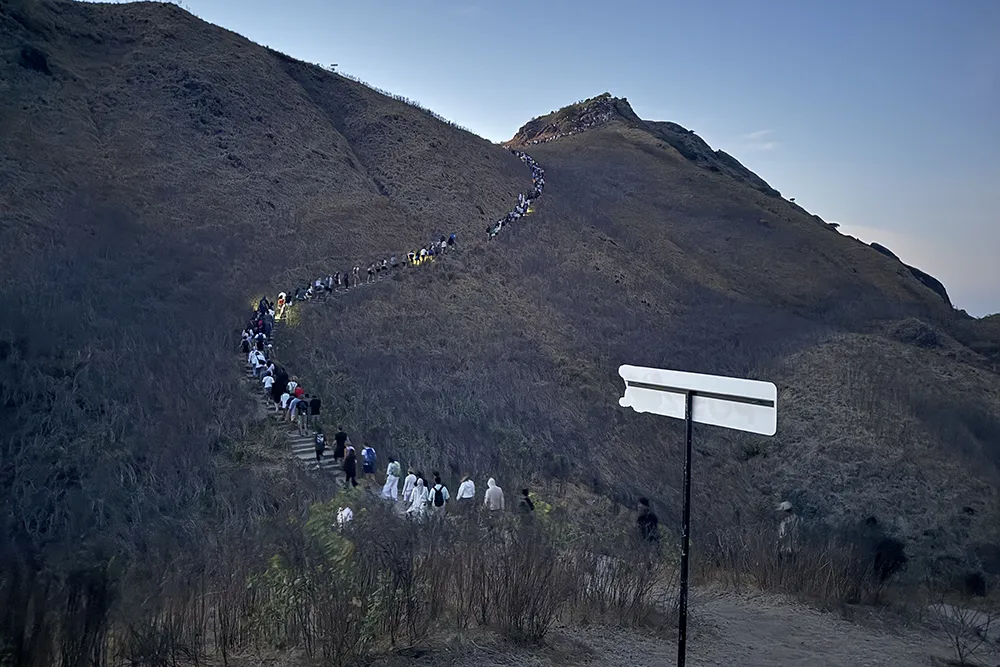
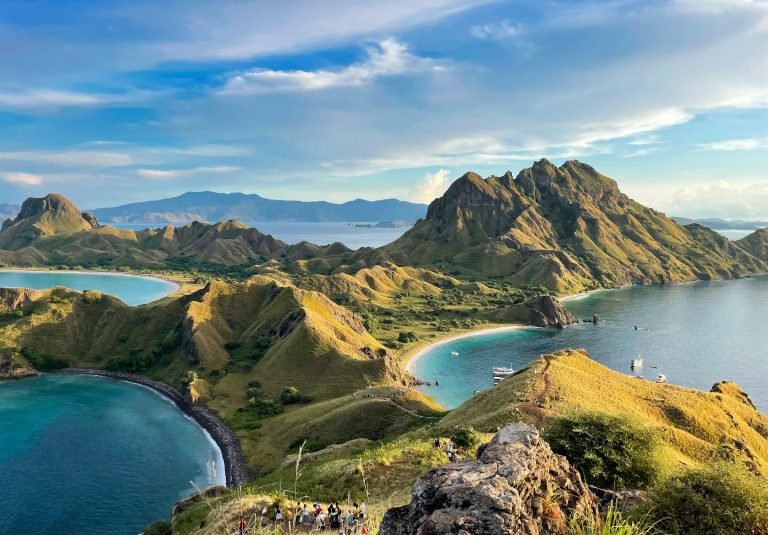
The core of the new policy is a direct response to soaring visitor numbers, which surpassed 300,000 in 2024. This placed extreme, unsustainable pressure on the park’s fragile land and marine environments. Government officials noted that popular viewpoints, particularly the iconic trail on Padar Island, had become severely “overcrowded” and resembled a “busy marketplace.” This degrades the visitor experience and contradicts the park’s fundamental conservation goals.
The Solution: A New “Niche” Ecotourism Model
The Indonesian government is intentionally shifting away from high-volume mass tourism. The stated goal is to reposition Komodo as a more exclusive, sustainable, “niche” ecotourism destination. To achieve this, two major, interconnected changes are being implemented:
- A Strict Daily Quota: A hard cap of 1,000 visitors per day will be enforced across the entire park.
- A Mandatory Booking App for boats: All visitor registration, permit booking, and quota allocation will be centralized through a new, official mobile application named “SiOra.”
2. The Official Timeline: When Do These Rules Start?
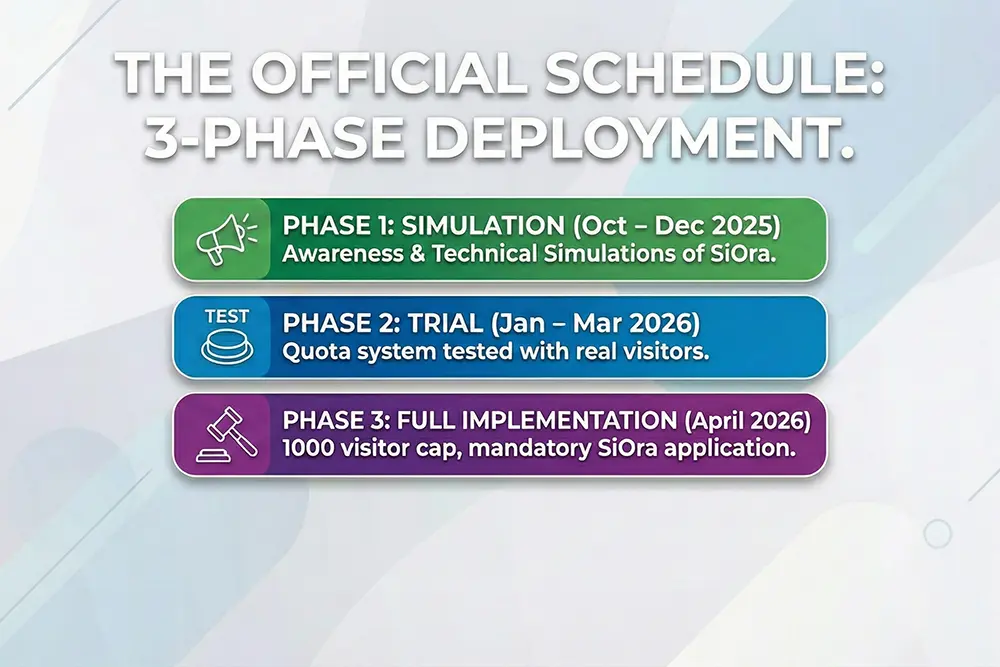
To ensure a smooth transition, the government has mandated a clear three-phase rollout for the new system:
- Phase 1: Simulation (October – December 2025): Public outreach, information dissemination, and technical simulations of the SiOra booking platform.
- Phase 2: Trial (January – March 2026): The full quota and session system will be actively trialed with live visitors.
- Phase 3: Full Enforcement (April 2026): The 1,000-visitor daily cap, managed exclusively via the SiOra app, becomes fully effective and legally binding for all boat operators.
3. Deconstructing the New 1,000-Person Quota
This new system is designed to limit not only how many people enter but also when and where they go, ensuring a higher-quality, less crowded experience.
The Daily Cap: A Park-Wide Mandate (Including Divers)
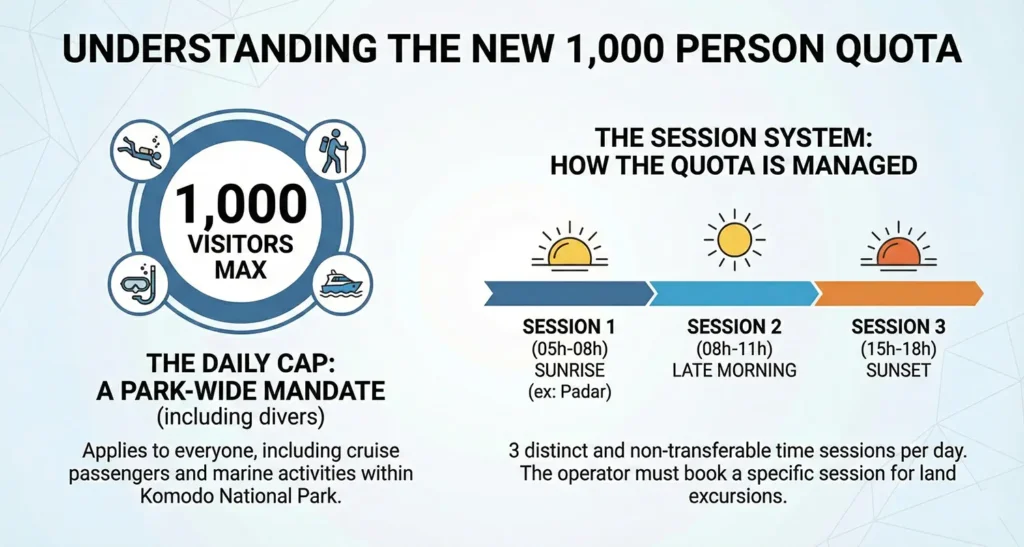
The 1,000-person limit is the new hard cap for all visitors within the main tourism zones of Komodo National Park. This is a crucial detail for Phinisi cruise and dive guests: the quota applies comprehensively to all visitors, including those on land for trekking and those participating in marine-based activities like scuba diving and snorkeling within the park’s boundaries. Every person on a liveaboard counts toward this daily limit.
The Session System: How the Quota is Managed
To solve overcrowding, the 1,000-person quota will be operationally divided into three distinct, non-transferable time sessions per day, ensuring visitor flow is spread evenly:
- Session 1 (e.g., 05:00 – 08:00): The sunrise session, ideal for Padar Island.
- Session 2 (e.g., 08:00 – 11:00): The late-morning session.
- Session 3 (e.g., 15:00 – 18:00): The sunset session.
When booking a permit, the boat operator must select a specific session for land excursions.
4. Mandatory Permit: Why Everything Goes Through SiOra
The SiOra app becomes the centralized platform for:
- Visitor registration
- Quota allocation
- Session selection
- PNBP payment (government-mandated fees)
Permits are confirmed only once the required fees are paid digitally. Walk-in visits will no longer be possible, even for simple trekking or snorkeling. Passengers do not have access to this platform, instead, the boat operator organizing your cruise has the responsibility of securing permits for passengers.
5. Your 2026 Komodo Budget: Deconstructing the Fees
Good News First: The IDR 3.75M Fee is CANCELED
The widely-publicized, exorbitant conservation fee of IDR 3,750,000 (approx. $240 USD), which was proposed in 2022, has been officially and permanently canceled by the Indonesian government. Any information still referencing this high price is outdated.
The Real 2026 Fees: A Detailed Breakdown
The new SiOra permit pre-pays the existing, standard bundle of government-mandated fees (known as PNBP). These fees are charged per person, per day, and are composed of several “a la carte” components:
| Fee Component | Amount (IDR) | Charged | Details |
| National Park Entrance Fee (PNBP – International) | 250,000 | Per person, per day | Flat international rate. Covers trekking, snorkeling, wildlife viewing, and island entry. No weekend/holiday surcharge. |
| Diving Surcharge | 25,000 | Per diver, per day | Only applied if scuba diving is part of your itinerary. |
| Harbor Fee | 25,000 | Per person, per port entry | Generally paid once per cruise departure from Labuan Bajo. |
| Ranger Fee – Padar Island | 150,000 | Per group (up to ±5 pax) | Mandatory ranger escort for the Padar sunrise hike. Cost is shared among your group. |
| Ranger Fee – Komodo or Rinca Island | 200,000 | Per group (up to ±5 pax) | Required ranger guide for any dragon trekking. Shared fee, not per person. |
| Environmental / Conservation Taxes | — | — | No separate charge. Conservation costs are already included in the PNBP entrance fee. |
| Seasonal or SIORA Surcharges | — | — | None. The SIORA system only manages quotas and e-tickets, not prices. |
Your cruise operator normally handles the entire process—securing your daily quotas in SIORA, managing the e-tickets, and paying the correct PNBP fees—Park fees are set by government regulation and must be paid in cash. So bringing enough Indonesian Rupiah is important.
6. Critical 2026 Planning Strategy for Your Phinisi Cruise
For liveaboard and Phinisi charters, this new system creates a fundamental operational shift.
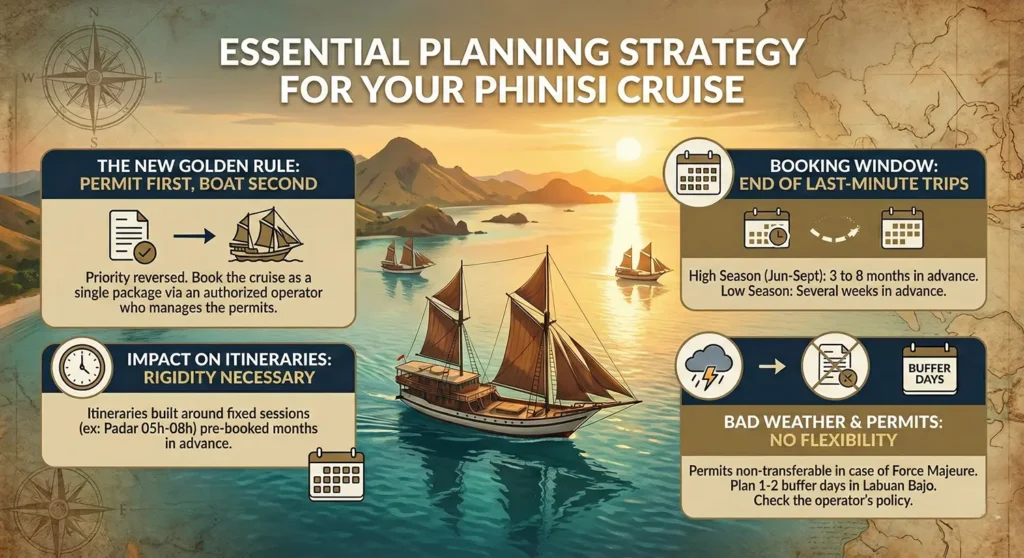
The New Golden Rule: Permit First, Boat Second
The booking priority has flipped entirely. Because only 1,000 permits exist daily and they are tied to specific sessions, your entire cruise must be booked as a single, confirmed package through a licensed operator who manages this process, making them the essential first step of your journey.
Booking Window: The End of Last-Minute Trips
With only 1,000 slots available per day, competition will be intense. We strongly advise you to book your cruise:
- Peak Season (June – September): 3 to 8 months in advance is now essential to secure a permit for your desired dates.
- Low Season: Booking at least several weeks in advance is highly recommended.
How the New Quota Impacts Phinisi & Liveaboard Schedules
The new system imposes a necessary rigidity on all itineraries. If you want a sunrise hike on Padar Island for Day 2, your operator must pre-book and secure a permit for every guest for “Session 1: 05:00-08:00” months in advance. The entire cruise schedule must be meticulously reverse-engineered to fit around these immovable, pre-booked land excursion slots, affecting sailing and meal times.
The Critical Question: What Happens in Case of Bad Weather?
This is the most critical logistical conflict. Your captain will always prioritize safety and may cancel a day’s sailing.
- Permits Are Not Flexible: Your digital permit is a reservation for a specific session on a specific date. If your trip is canceled that day due to a “Force Majeure” event like weather, your permit for that specific session becomes void.
- No Automatic Rescheduling: The permit does not automatically transfer to the next day. The 1,000-person quota for the next day is a separate inventory that was likely booked full months in advance.
- Plan “Buffer Days”: The most important strategy is to add 1-2 buffer days to your itinerary in Labuan Bajo. If your cruise is canceled on Monday, your buffer days on Tuesday or Wednesday give your operator a chance to get you back on the water as soon as it’s safe. Always check your operator’s specific rescheduling policy before booking.
7. Strategic Itinerary Choice: Rinca Island vs. Komodo Island
With permits required for specific locations and time slots, choosing where to trek becomes a strategic choice that must be made at the time of booking. Both Komodo and Rinca islands offer guaranteed dragon sightings but provide very different experiences:
Rinca Island: The Structured Safari
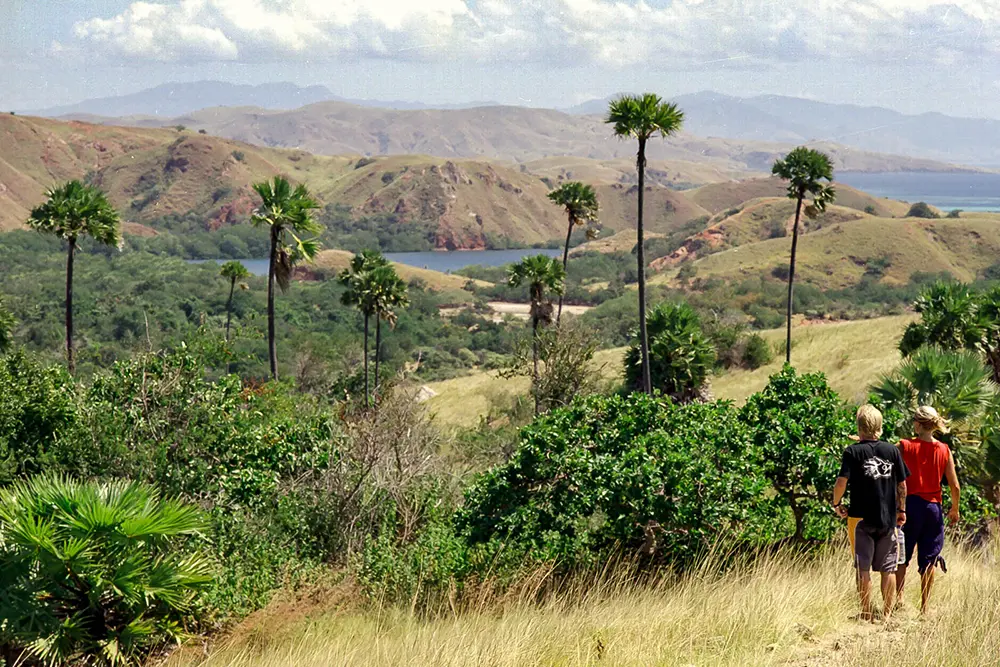
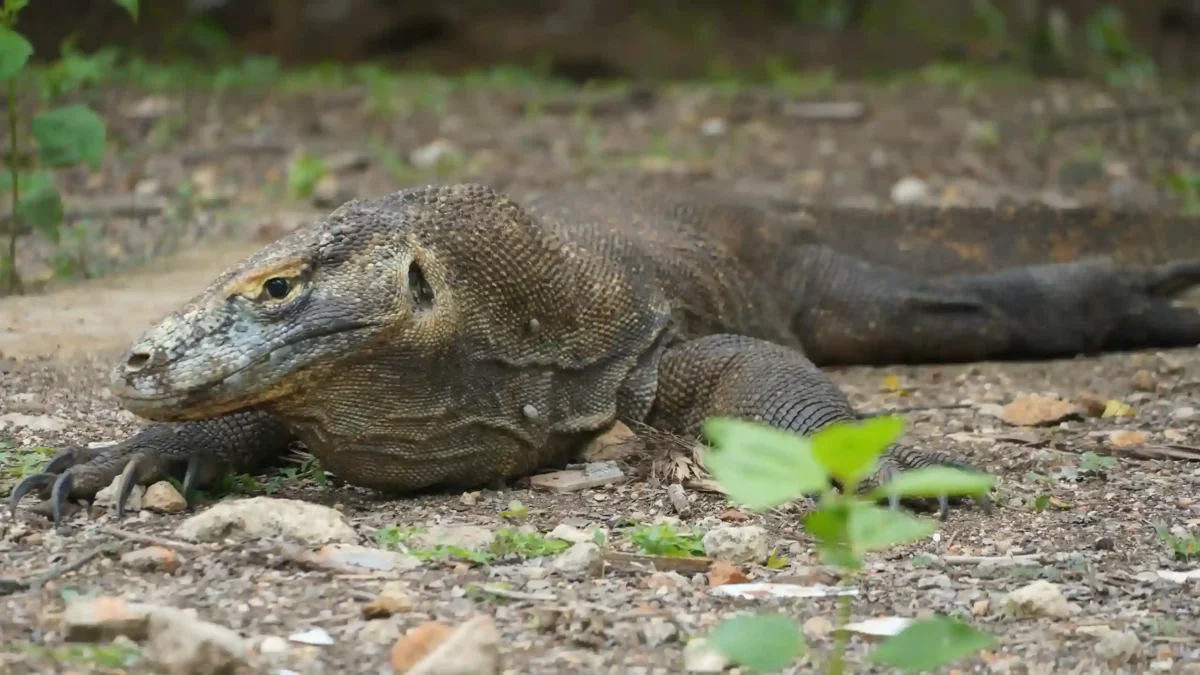
Closer to Labuan Bajo, Rinca is more time-efficient and accessible for liveaboards on tighter schedules. Its expansive, dry savanna makes dragon spotting reliable, with organized and safer trails, ideal for families or relaxed trekkers.
Komodo Island: The Wild Adventure
This is the larger, more distant island, requiring longer sailing time. It offers a wilder, more challenging trek through a dense, rugged forest, giving visitors a sense of “Jurassic World” exploration. Visitors can choose between various trek lengths based on fitness level.
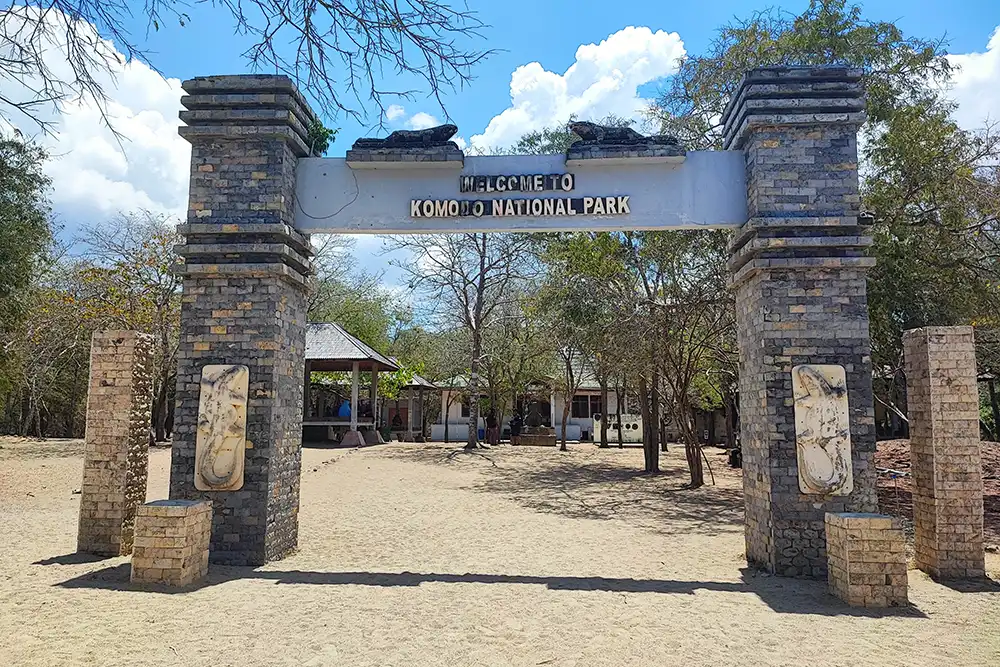
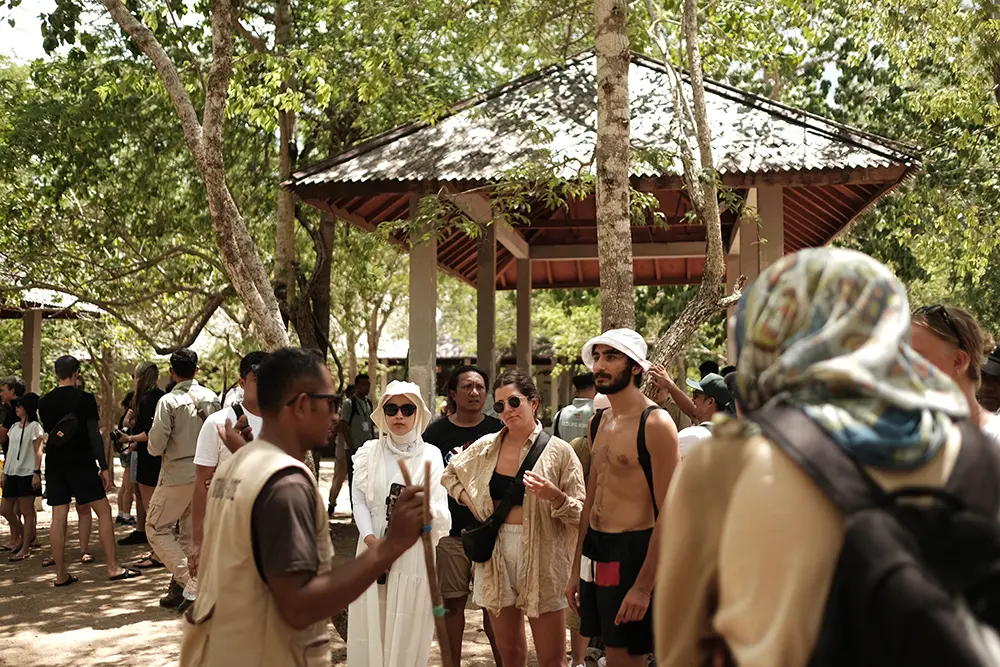

Recommendation: For a tighter schedule or guaranteed efficiency within a 3-hour session, Rinca Island is the logical choice. For those seeking the “Jurassic World” feel and a rugged adventure, Komodo Island is worth the extra sailing time and planning rigidity.
8. Your Final 2026 Komodo Booking Checklist
The new era of Komodo travel is here. It is more sustainable, more exclusive, and will provide a vastly better visitor experience for those who plan ahead.
- Book 3-8 Months in Advance: Mandatory for peak season (June-August).
- Book With a Licensed Operator: Essential first step to bypass the SiOra payment barrier and secure a permit.
- Plan for Bad Weather: Add 1-2 “buffer days” to your Labuan Bajo schedule for rescheduling flexibility.
- Carry Cash (IDR): Essential for crew gratuities, tips, and personal purchases in Labuan Bajo.