The Sea’s Answer: A 2026 Komodo Sailing Story
Chapter 1: The Anchor & The Spark
It began, as these things often do, with a quiet restlessness. It wasn’t a sudden crisis, but a slow, creeping dissatisfaction. It was the low, persistent hum of the everyday; the sameness of our screens, the digital static that buffered us from our own lives. 2025 had been a year of endless video calls, where our faces floated in little boxes, disconnected from the bodies that sat in the same chair for eight, ten, twelve hours a day.
We had become spectators. Our days were measured in notifications cleared, emails answered, and feeds scrolled. We consumed, we reacted, we double-tapped, but we rarely felt. Our thumbs were calloused from swiping on glass, our eyes tired from a constant bath of manufactured blue light. We were connected to everyone, all the time, yet fundamentally tethered to nothing. We were, in the truest sense, lost in the static.
And then, one Tuesday, we saw it. A photograph, dropped into our digital feed like an anchor from another world.
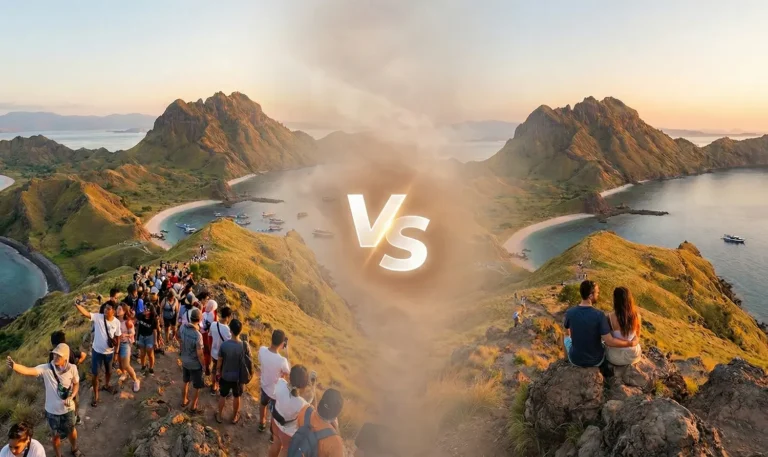
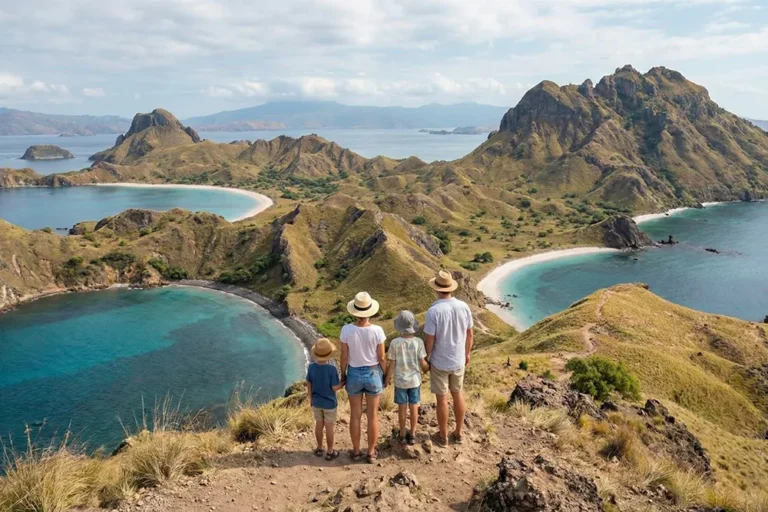
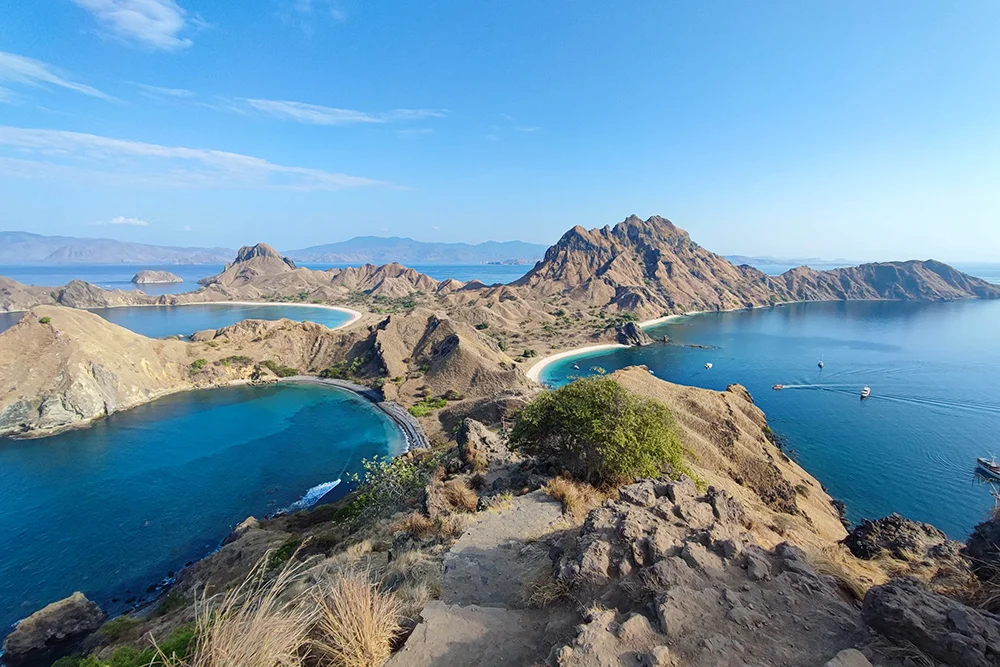
It wasn’t just a picture. It was a promise. It was an impossible landscape that defied digital manipulation. A high viewpoint, looking down on a narrow strip of land that connected to a larger, dragon-shaped island. On either side, the land curled into three perfect, impossible bays. And the beaches of these bays were each a different color—one was jet black volcanic sand, one was pale, ghostly white, and the third was a soft, rosy pink. The ridges of the island looked like the sleeping spine of a prehistoric beast, sun-baked and defiant. It was raw, real, and utterly beautiful.
It was Padar Island
A quick search traced its location on a map, and a new world unfolded. It was in the heart of the Komodo Archipelago, a string of rugged, volcanic islands off the coast of Flores, Indonesia. It was a place you couldn’t just visit on a whim; you had to journey to it. You had to sail.
The decision was made in a single evening, a spark of shared, reckless spontaneity that felt more real than anything we had done in months. The conversation was short, almost telepathic. “That place.” “I know.” “When?” “Next year. 2026. We have to.”
We wouldn’t just fly to the nearby town of Labuan Bajo, hire a speedboat for the day, sprint to the viewpoint, get the picture, and leave. That felt too easy, too transactional. It would be just another digital “like” ticked off a list, another trophy for the feed. No. We would earn it. We would live on the water that surrounded it. We would give ourselves over to the sea.
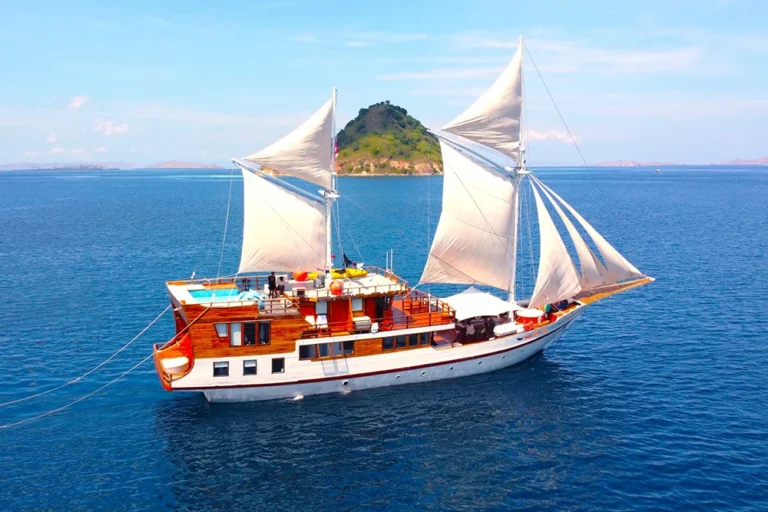
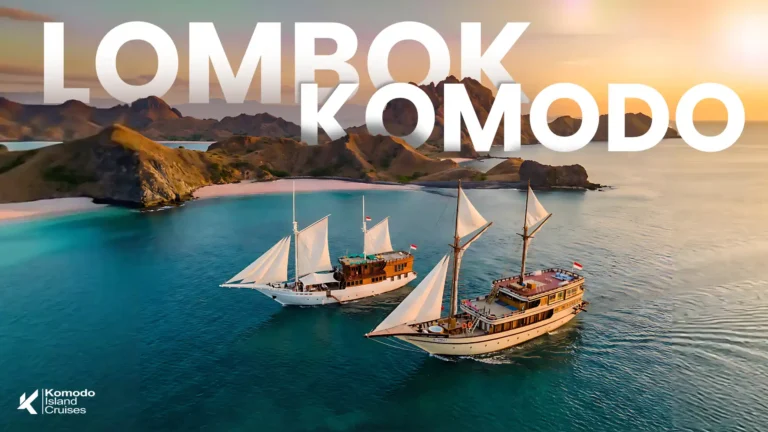
We booked a 3-day, 2-night phinisi cruise, a journey on a traditional wooden sailing vessel that would begin and end at the harbour of Labuan Bajo. That simple click of “confirm” was a small act of rebellion against the life of passive consumption. It was a pin dropped on a map, a single point of intention that would soon become the anchor for our entire year. We were looking for something real, something to touch and feel and taste. We were looking for a story. And this, we knew, was it.
Chapter 2: The Heart of the Archipelago
The first thing to dissolve at sea is your schedule. The second is your sense of self-importance. Time loses its hard edges, its 60-minute increments, and softens into a new, ancient rhythm. It’s dictated by sunlight, engine thrum, and the slow, powerful pull of the tide.
We boarded our phinisi in the bustling, chaotic, wonderful Labuan Bajo harbour. The air was thick with the smell of diesel, salt, and grilling fish. Music drifted from waterfront cafes, mixing with the calls of boat captains and the chatter of crews loading supplies. We stepped from the solid, predictable jetty onto the gleaming, polished wood of our home for the next three days. The crew, all smiles, took our bags and handed us a cold, sweet pineapple juice. And then, with a low rumble, the engine engaged. We were moving. We slid past dozens of other boats, from tiny fishing jukungs to magnificent, multi-masted phinisis, and watched the colorful, cluttered town shrink into the coastline. Within an hour, it was gone. The world had become water, light, and a string of rugged, sun-baked islands that looked like sleeping crocodiles.
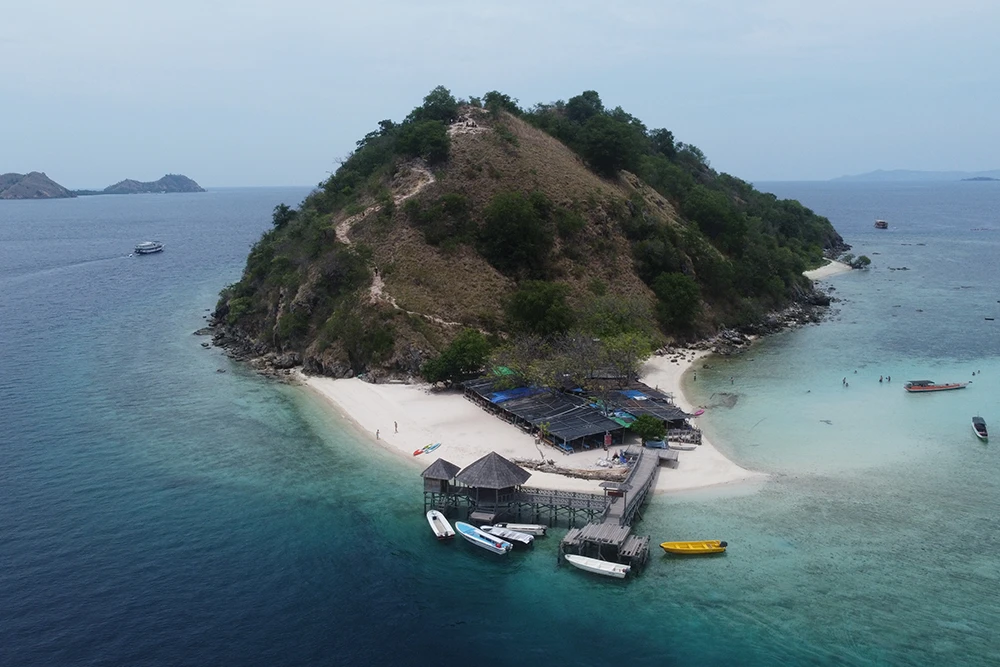
Our first stop was a gentle immersion. A small, postcard-perfect island with a white-sand beach. We dove off the side of the boat into water so clear and turquoise it felt like jumping into a gemstone. The shock of the cool, clean salt water was electric, washing away the last remnants of our old routines, the grime of airports and the residue of our digital lives. We snorkeled for an hour, mesmerized by the simple, vivid life of the reef—clownfish defending their anemones, electric-blue damselfish moving as one, the intricate, living architecture of the coral itself
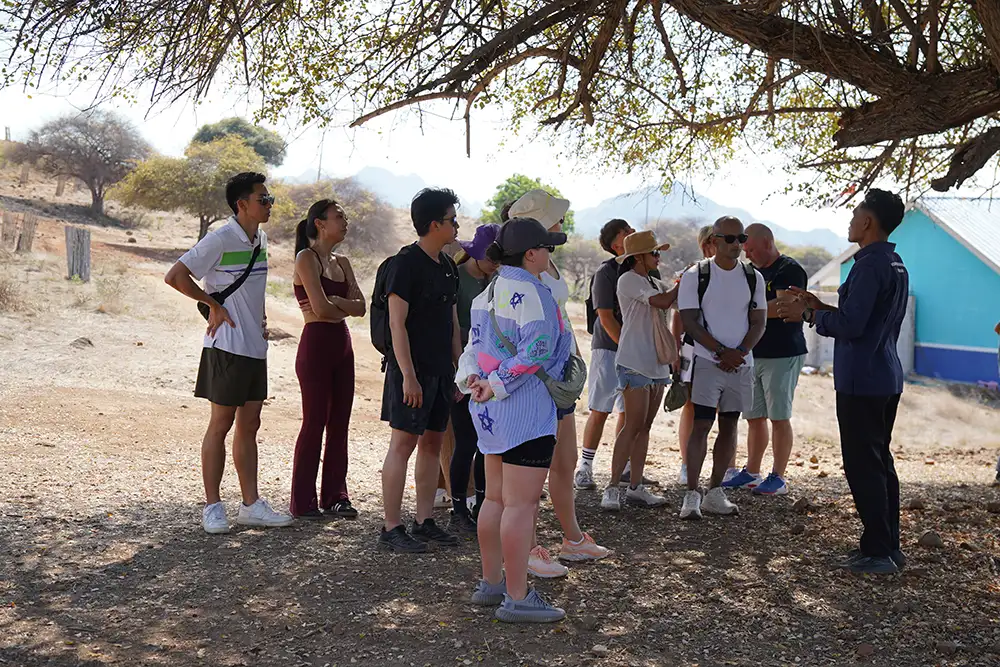
But this was just the prelude. We woke on Day Two, and the world had changed. The air felt different—drier, heavier, ancient. We had arrived at Komodo, the realm of giants. We were met at the ranger station by a man with a calm face, watchful eyes, and a long, forked stick. He briefed us in low, serious tones. “We walk in a single file. Stay behind me, stay with the group. No sudden movements. No loud noises. Respect the land. This is their home, not ours.”
We walked. The sun was already relentless, baking the dry, savanna-like earth. The air was tense. The ranger pointed out tracks, a nesting site—a massive, disturbed mound of earth—the sun-bleached bones of a water buffalo. And then, he stopped.
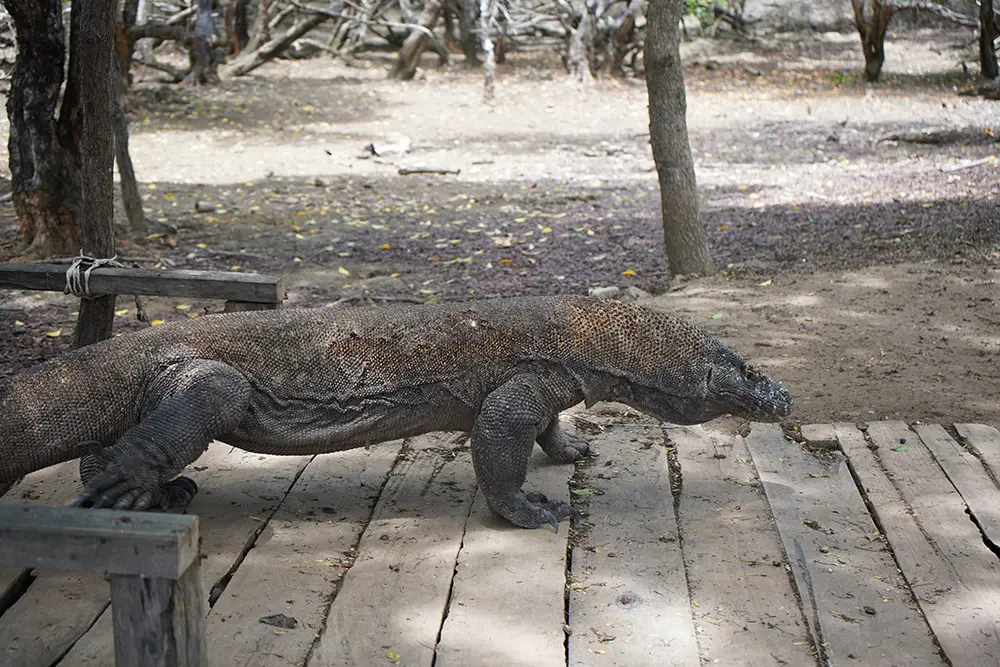
“There.”
He was magnificent. A three-meter relic of muscle and scale, sunning himself by a dry riverbed. He was perfectly still, his hide like a suit of medieval armor. He seemed to be asleep, but his eyes were open, ancient and unblinking. As we watched, he tasted the air, his long, yellow, forked tongue flicking out with a slow, reptilian grace. He was all muscle and prehistoric patience. We were no longer in the modern world; we were visitors in a land that time forgot. We felt our own smallness, our own fleeting, fragile place in the timeline of this planet.
From the ancient, we sailed to the sublime. The next morning, we woke at 4:00 AM. The world was pitch black, the sky a riot of stars so bright they seemed to have weight. We were ferried to the shore of Padar Island, our headlamps cutting small cones of light in the darkness. The hike was steep, the air cool and still. All we could hear was the sound of our own breathing and the crunch of loose gravel under our feet. For forty-five minutes, we climbed, our legs burning in the quiet of the pre-dawn.
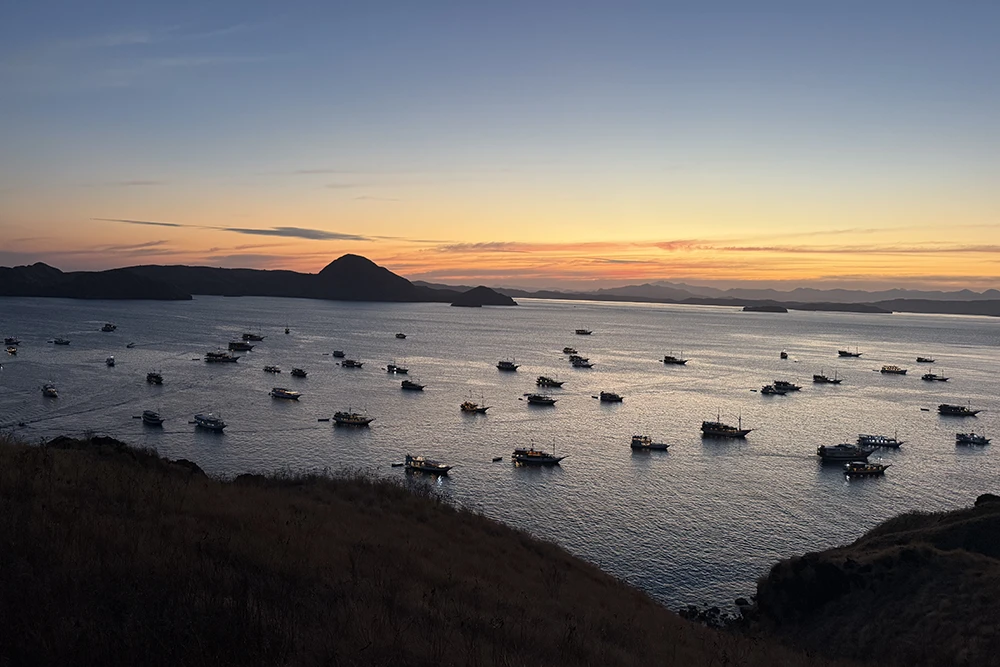
We scrambled up the last ridge just as the first hint of light appeared in the east. We sat, gasping for breath, and waited. Then, the sky began to bloom. First, a deep, bruised purple, then a soft, powdery violet, then a streak of impossible crimson. The sun finally spilled gold and rose over the horizon, illuminating, layer by layer, those three iconic bays. The water was glass. The black sand, the white sand, the pink sand—it was all real. It was a sight so perfect, so utterly impossible, it brought a quiet, involuntary sting to our eyes. We had earned the view. And it was a thousand times better than the photograph
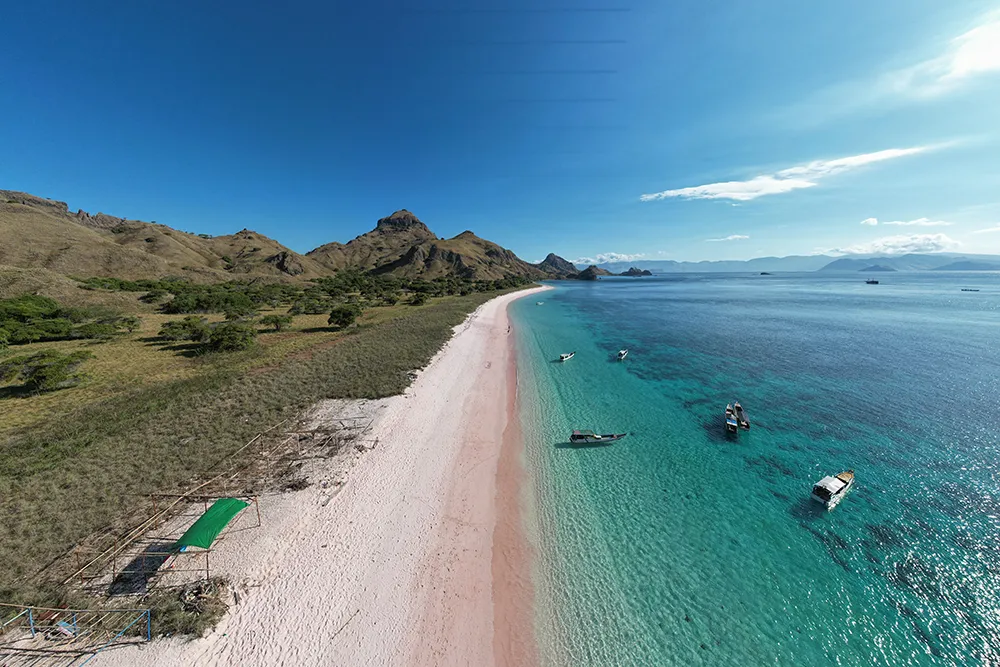
That afternoon was a blur of impossible color. We anchored at Pink Beach. From the boat, it was a pretty, rose-colored crescent. On the shore, we ran our hands through the sand and saw it for what it was: millions of tiny, broken fragments of red organ-pipe coral mixed with the white grains. We waded into the electric-blue water and drifted weightless over the coral gardens just offshore. It was a busy, silent metropolis. A small sea turtle paddled by, unbothered. Parrotfish, in their neon-punk colors, chomped audibly on the coral. We were floating in pure, effortless joy.
But the sea, we learned, kept its best secrets for the deep. At Manta Point, the guide’s instructions were simple: “Jump in, stay together, and float. Let the current take you.” We slipped into the deep blue of the open channel, a small act of surrender. The water was cooler here, the current surprisingly swift. We just floated, masks down, scanning the deep. Then our guide pointed down, his excitement visible even through his snorkel. “Manta!”.
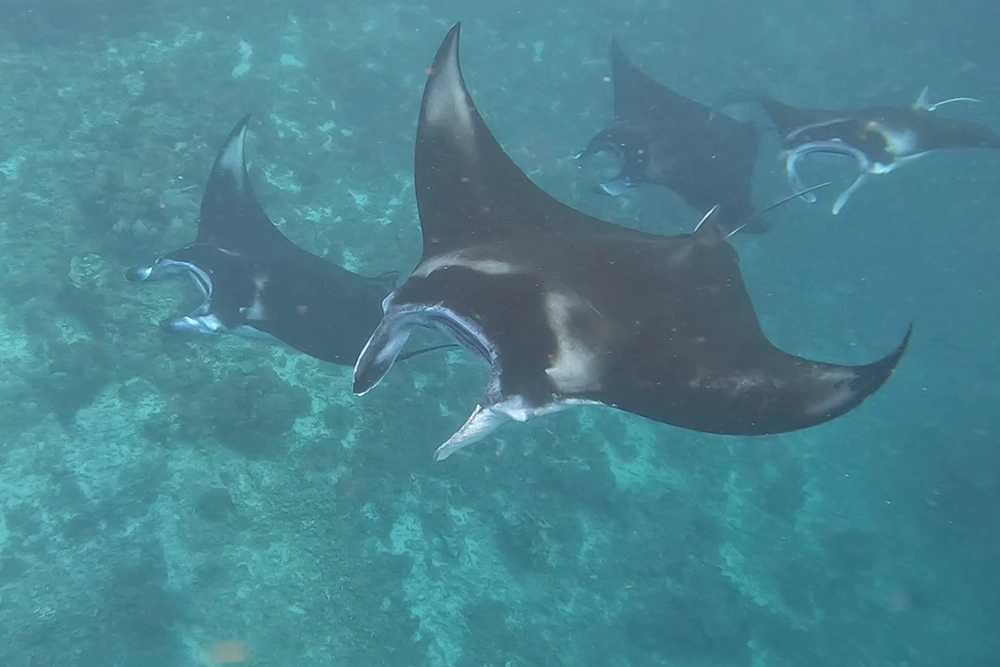
A shadow, then another. A silent ballet of giant manta rays, some wider than a car, glided beneath us. They were feeding, looping and soaring through the plankton-rich water with an elegance that defied their size. They were spaceships, they were birds, they were ancient and wise. One of them, curious, looped up towards us, its giant, intelligent eye seeming to look right into ours before it banked and dove back into the deep. It felt like a meditation, a communion.
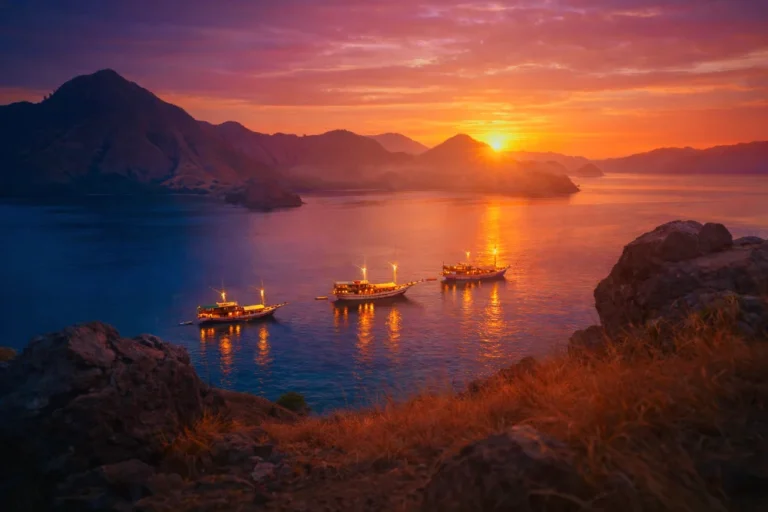
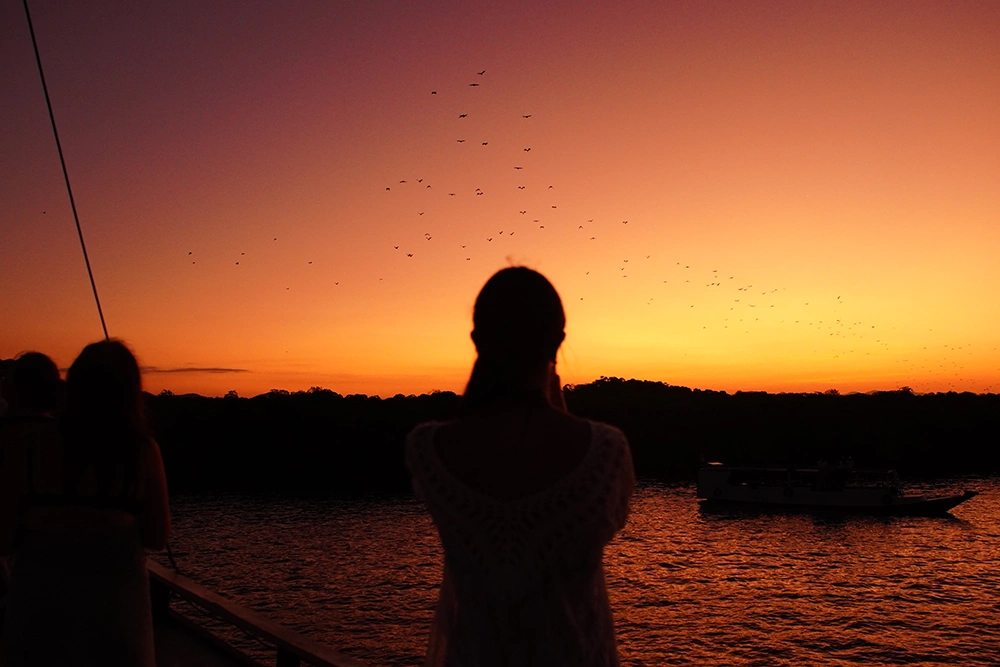
As dusk fell on our final day, we anchored near Kalong Island. It seemed like nothing, just a dense, unremarkable tangle of mangroves. The sky, however, was putting on a show, turning a violent orange and purple. We sat on the deck, drinks in hand. Then, as if summoned by the sunset, a single black wing took to the sky. Then a dozen. Then a hundred. Then a thousand. Within minutes, the entire sky was a swirling, beating river of giant fruit bats, a million wings against the twilight, streaming out from their mangrove roost to feed on the mainland of Flores. We sat in stunned silence, drinks forgotten in our hands, completely, utterly speechless, witnesses to a primal, nightly migration
Chapter 3: The Soul of the Phinisi
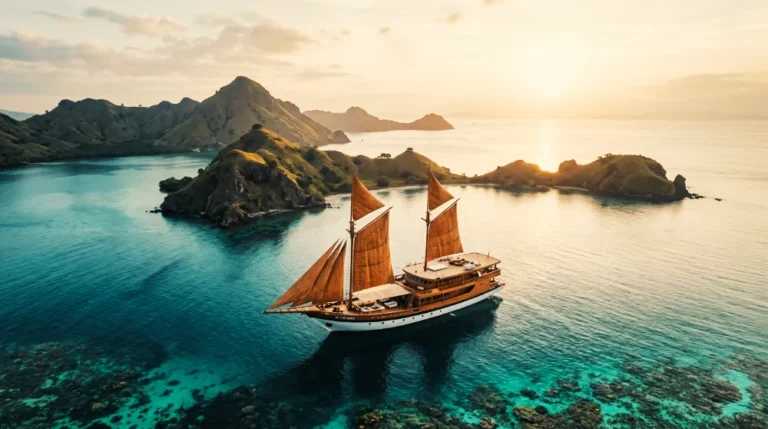
A phinisi is more than a boat. It’s your compass, your kitchen, your veranda on the sea. It’s the vessel for the entire experience, and in a place with no hotels, no restaurants, and no roads, it is everything.
Our wooden home became the center of our new, floating world. We fell into its rhythm. We woke in our simple, clean cabin to the gentle rocking of the hull and the sight of sunlight dancing on the water, projected onto our ceiling. The first smell of the day was always fresh coffee, brewed by a crew member who seemed to never sleep.
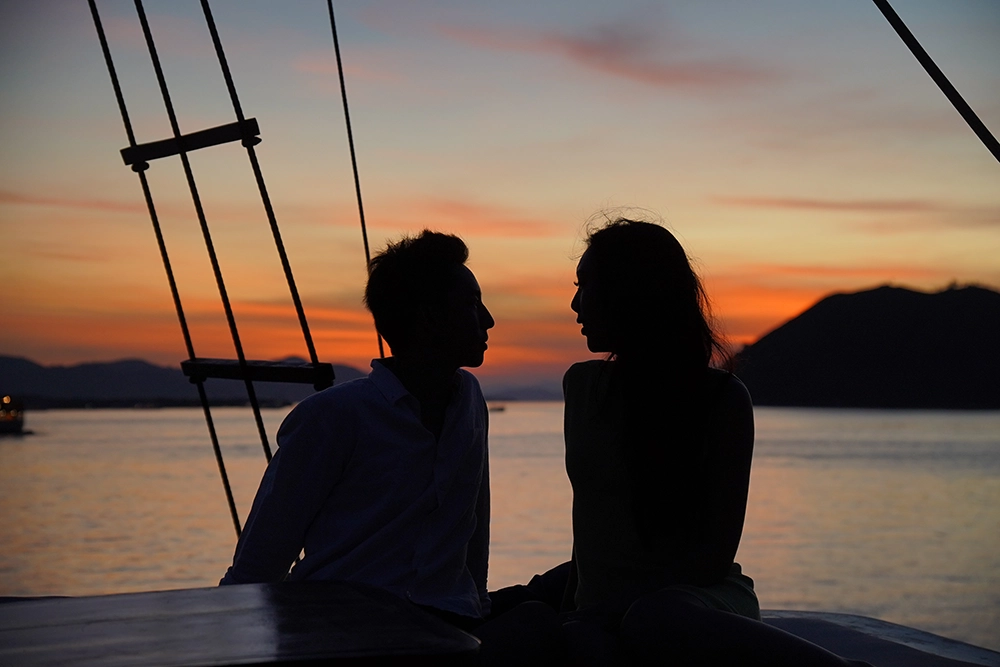
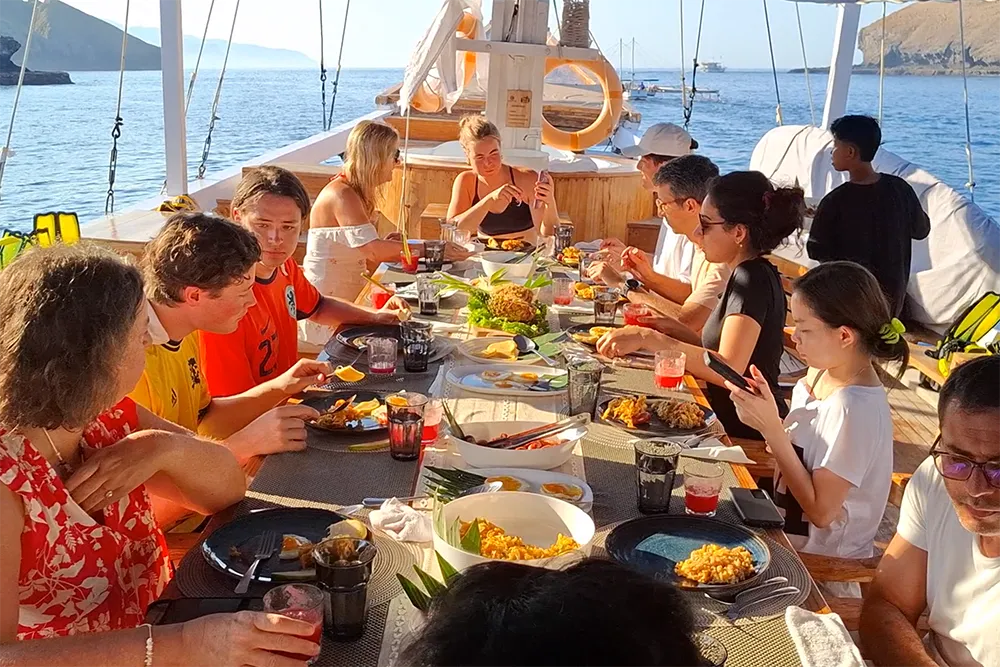
Life on board was a study in blissful “in-between” moments. It was reading a book on a giant beanbag on the sundeck, the sun warm on our skin, the wind drying the salt from our hair. It was dangling our feet off the bow, watching the water rush by, a mesmerizing, hypnotic blue. It was the communal hearth of the wide, open-air dining table, a place where we, a rambling collection of strangers from Spain, Australia, and Jakarta, became a sun-kissed, laughing family. We passed around heaping plates of nasi goreng, shared Bintang beers as the sun went down, and traded stories from our lives back in the “real world,” which already felt a million miles away.
The phinisi itself was a place of profound comfort. It was a beautiful contradiction: a traditional, handcrafted wooden vessel, built using techniques passed down for generations by the Bugis sailors, yet equipped with air conditioning, comfortable beds, and hot-water showers. It was this blend of raw, romantic tradition and simple, intuitive comfort that made it feel like a floating home, a safe harbor in a world of wild, untamed beauty.
Chapter 4: Guardians of the Passage
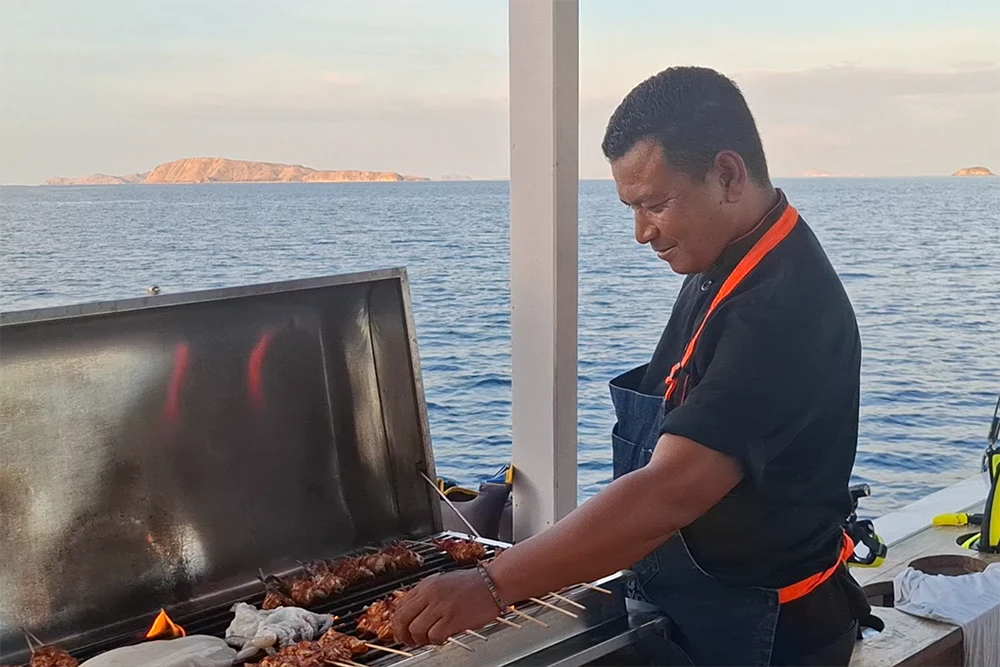
A wooden boat, no matter how beautiful, is just a stage. The heart of the play is the crew. They are the invisible threads that weave the entire experience into something magical.
Our captain was a man of few words, with a sun-etched face and eyes that held the sea’s moods. He was a quiet conductor of the elements. He was part of that Bugis seafaring legacy, a line of sailors who have read these stars and currents for centuries. He navigated by knowledge, not just by charts. He’d steer us to a snorkeling spot and say, “We wait 10 minutes. Current is changing.” And sure enough, 10 minutes later, the water would be calm. He steered us to coves he knew would be empty, or arrived at Manta Point just as the “cleaning station” was busiest. We felt utterly safe in his hands.
Our chef was a miracle worker. His galley was no bigger than a closet, yet he produced three magnificent feasts a day, plus snacks. How he did it on a rocking boat remains a delightful mystery. We’d wake to fresh-baked bread and banana pancakes with palm sugar. We’d surface from a long, tiring snorkel to find a hot, sweet pile of pisang goreng (fried bananas) and iced tea waiting for us. Lunches and dinners were sprawling Indonesian buffets: rich beef rendang, fresh-grilled fish with fragrant sambal, gado-gado with spicy peanut sauce, chicken satay, and always, a mountain of perfect, fluffy rice. He made us feel not just fed, but nourished, body and soul.
And then there was our guide, the bridge between our world and theirs. He was our snorkel leader, our hiking guide, our host, our translator, and our storyteller. It was his hand that pointed out the sleeping dragon, his excited voice that yelled “Manta!”, and his patient teaching that helped a nervous first-timer get her mask and fins on.
We came as strangers, paying customers, but the crew treated us as family. In their warm, genuine hospitality, their ready smiles, their quiet pride in their work, and their deep love for this region, we found the true soul of Indonesia. We were not tourists, consuming a product; we were guests, sharing their home.
Chapter 5: Return to the Jetty
All journeys must end. On the third morning, we woke to a familiar sight, a familiar sound. The engine thrummed at a slower pace. We walked onto the deck, coffee in hand, and saw the bustling, colorful harbour of Labuan Bajo growing larger. We were returning to Flores, the solid land where our dream began.
The contrast was immediate. The profound, elemental quiet of the sea was replaced by the lively, chaotic, wonderful energy of the port town coming to life. The sounds of civilization—other boats, car horns in the distance, the call to prayer echoing from a mosque—felt foreign and loud.
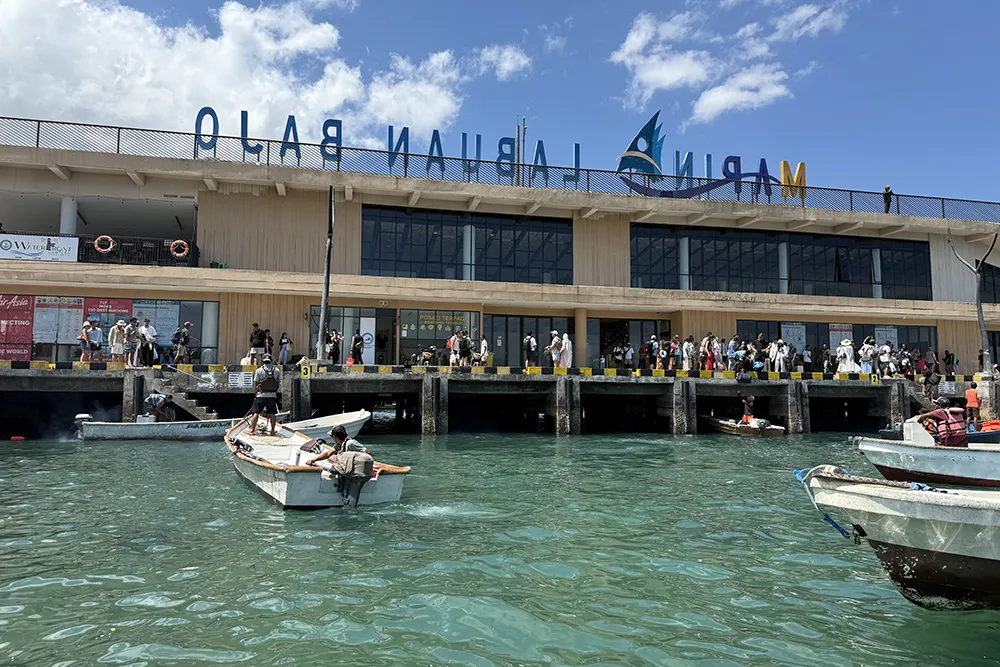
We stood on the deck for the last time, barefoot, salty-haired, and sun-browned, and felt… changed. The restlessness we’d felt all those months ago was gone. It hadn’t just been quieted; it had been answered. In its place was a profound, quiet fullness, a sense of having been reset. Our minds, once cluttered with digital static, felt as open and clear as the horizons we had just sailed. We had brought home more than pictures. We had brought home the feeling of the wind on sun-baked skin, the taste of salt on our lips, the profound silence of the deep, and the sound of laughter shared with new friends.
We said goodbye to the crew, our new family, with hugs and heavy hearts. We exchanged numbers with our fellow travelers, promising to share photos. As we stepped onto the jetty—our legs unsteady on solid ground, a classic case of “sea legs”—we looked back at the boat. It was just a vessel, a beautiful assembly of wood and rope. But it had carried us not just across the sea, but from one world into another. It had reset our clocks to the rhythm of the tide.
And perhaps, in 2026, your story will begin the same way ours did—with a restless heart, a search for something real, and the sound of waves against a wooden hull, promising a world of discovery.
A Note on Planning Your 2026 Voyage
This 3-day, 2-night journey is magical, but it is not infinite. The Komodo National Park is a protected area, and the best phinisi boats, each with its own unique soul and limited number of cabins, are often booked months or even a year in advance. To write your own 2026 story, we invite you to plan ahead.