Parent’s Guide to a Family with kids Komodo Cruise in 2026
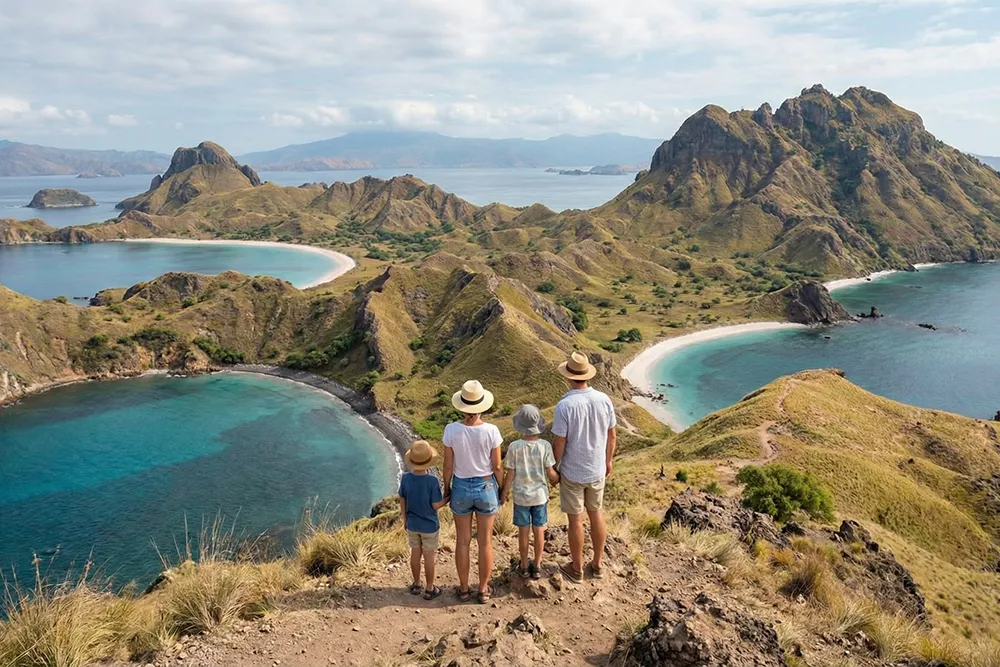
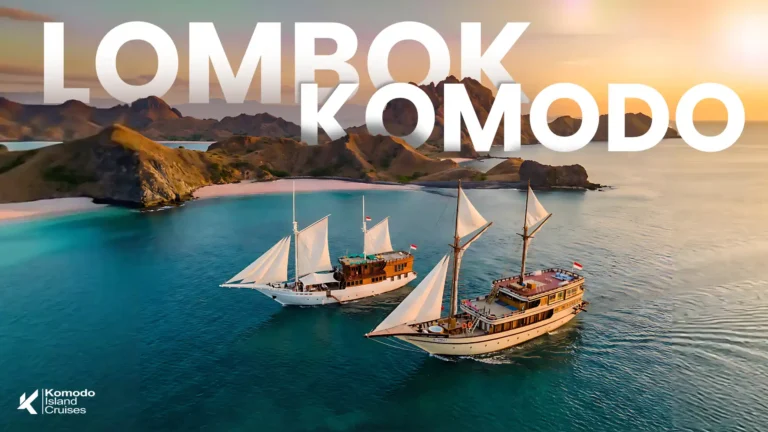
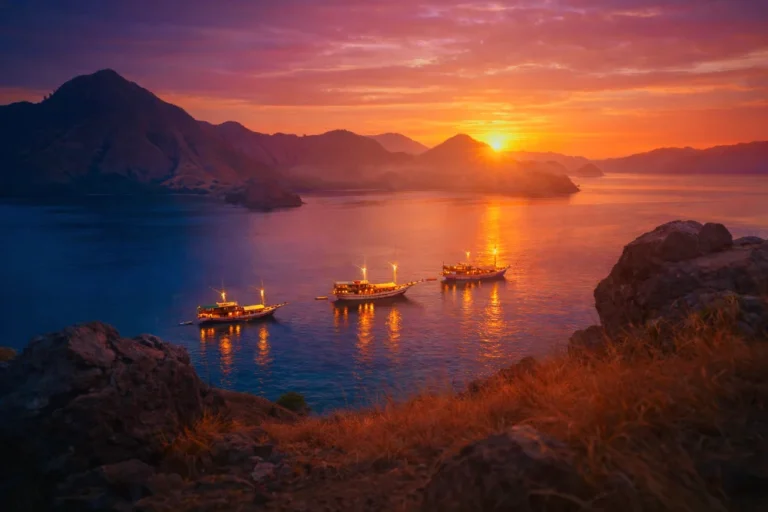
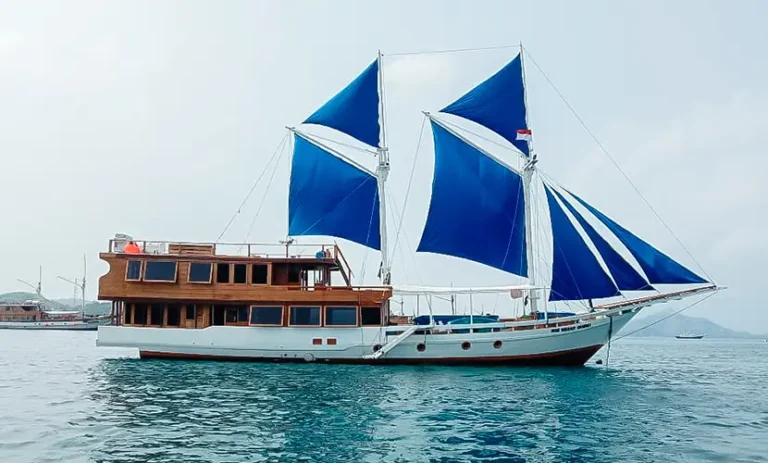
A liveaboard 3 Days 2 Nights (3D2N) or 4 days 3 Nights (4D3N) cruise through Komodo National Park is one of the most powerful, unforgettable adventures you can give your family. Sailing on a traditional Phinisi, seeing the layered volcanic ridges of the archipelago, snorkeling with turtles, and standing a safe distance from real Komodo dragons—this is the kind of trip your kids will remember for life.
But this isn’t a resort holiday, far from it. For several days, your boat becomes your home, dining room, playground, and base camp. Understanding the realities of boat life will help you decide whether this adventure is the perfect fit for your family in 2026.
Is This Trip Right for Your Family?
A Komodo cruise is an adventure-based trip. It’s exciting and rewarding, but different from a resort-style vacation.
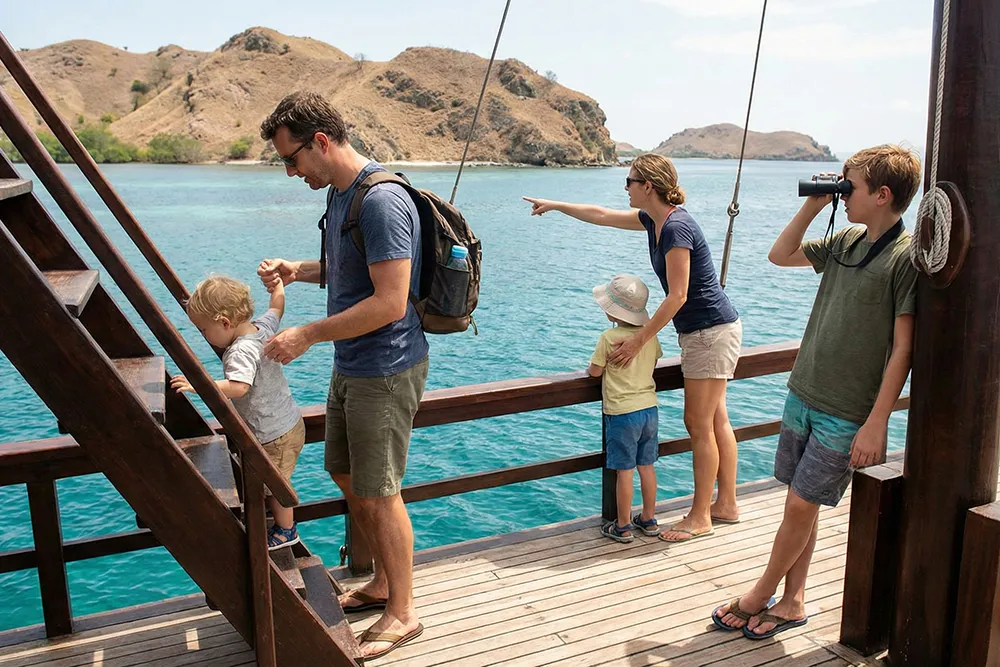
Toddlers can still join, but parents should expect a more hands-on trip: lots of stairs, bright sun, and constant supervision on deck. If your little one is very sensitive to heat or naps, a shorter day trip (or a private boat with a flexible schedule) may be the smoother choice. Younger kids (around five to seven) can manage the experience, but only with close supervision—expect to help them during hikes and constantly keep an eye on them on the boat. The sweet spot is usually kids aged eight to twelve. They can follow safety instructions, handle the hikes, and will be completely captivated by the wildlife and the ocean. Teenagers may grumble about the lack of Wi-Fi—but only for the first hour. After that, the adventure usually wins them over.
If your family enjoys nature, wildlife, and simple-but-clean comfort, you’ll thrive here. If you prefer resort-style structure, privacy, and constant convenience, this trip may feel challenging.
When to Go for Your 2026 Komodo Cruise
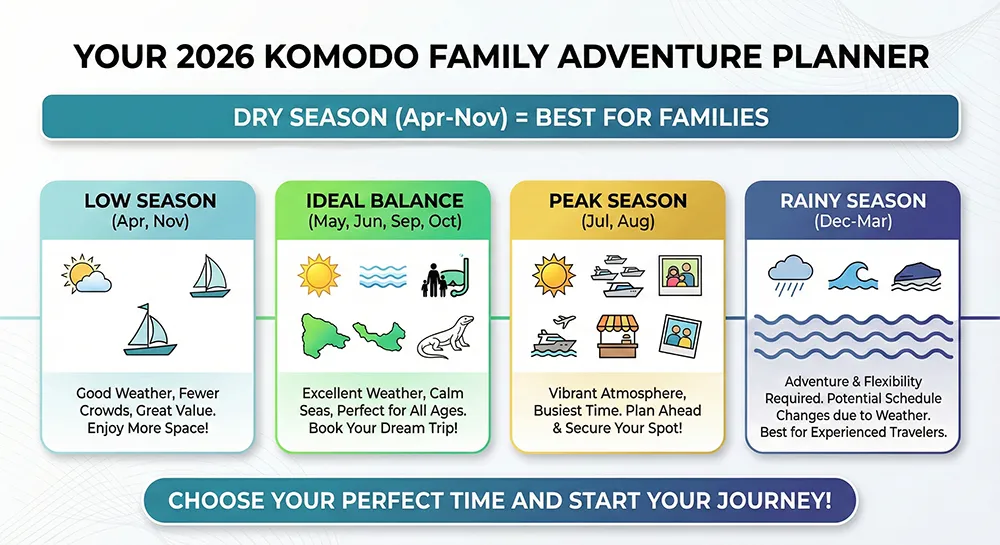
The dry season from April to November offers the best weather. July to August are the busiest and priciest months and will book out fast for both shared trips and private charters. If you’re traveling in peak season, lock in your dates early—especially if you want specific cabin types (or a full boat for your family).
For most families, May, June, September, and October deliver the ideal balance—excellent weather, calmer seas, and fewer boats around the main attractions. These months also offer greener hills and more comfortable temperatures. The rainy season (December to March) brings rough seas and frequent cancellations, making it unsuitable for family travel.
Choosing the Right Boat
Your boat is the core of your entire experience. The choice usually comes down to shared trips versus private charters.
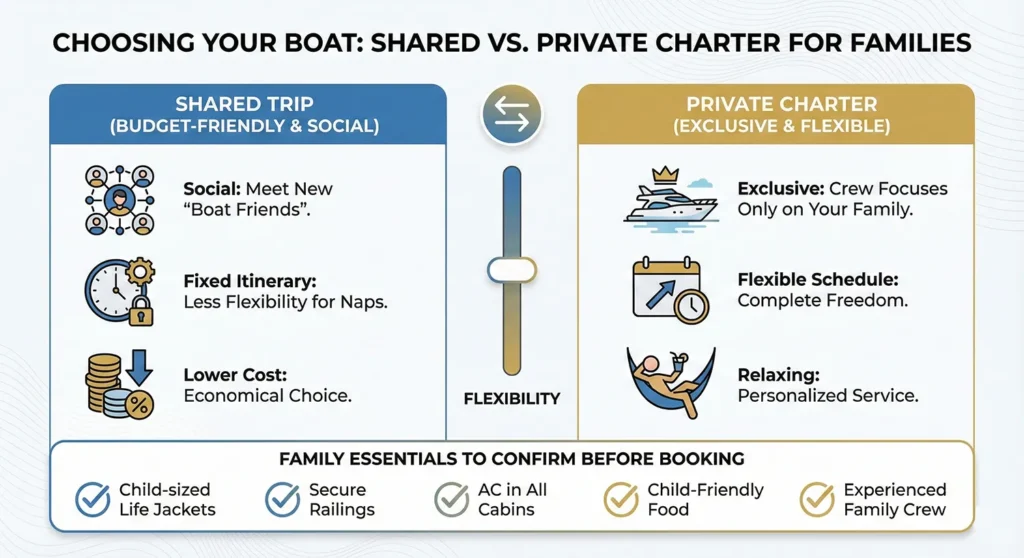
4D3N, 3D2N or 2D1N shared Trips are cheaper, but they follow strict itineraries and bring together travelers with different interests and energy levels. Shared trips can actually be great for kids—there’s always something happening and they often love making new “boat friends.” The main difference is flexibility: the schedule is fixed, so naps and early bedtimes need a bit more planning.
A private charter, while more expensive, gives you complete freedom. You decide how long to stay at a beach, whether to skip a hike, or when to have meals. The crew focuses only on your family, which makes the trip more flexible and safer. Parents usually find this option far more relaxing.
Before you book, make sure to confirm family essentials: child-sized life jackets, secure railings, AC in all cabins, emergency communication equipment, child-friendly food options, and whether the crew has experience hosting families.
Family Cabins and Sleeping Arrangements
Not all Phinisi boats are designed with families in mind, so understanding cabin layouts before booking is essential.
Most boats offer private ensuite cabins designed for two adults. Some cabins can accommodate children as extra passengers, either without an extra bed (child shares the existing bed with parents) or with an additional mattress or extra bed, depending on cabin size and boat layout.
Family-friendly cabins are limited and should always be confirmed in advance—especially for school holidays and peak travel months.
Quick Comparison: Common Family Cabin Setups
|
Family Setup |
Sleeping Arrangement |
Best For |
|
2 adults + 1 child (no extra bed) |
Child shares existing bed with parents |
Toddlers or young children who co-sleep |
|
2 adults + 1 child (extra bed/mattress) |
Triple cabin or double cabin with an extra bed |
Kids aged 5–10 who need their own space |
|
2 adults + 2 kids |
Four-person cabin (two double beds or four single beds) |
Older kids or families wanting more comfort |
Availability depends on boat design. Always ask for cabin photos and layout, not just descriptions.
Komodo Shared Trips vs. Private Charters (Family Perspective)
|
Komodo Shared Trips |
Komodo Private Charters |
|
Fixed cabin layouts and limited family-sized cabins |
Full flexibility with cabin allocation |
|
Extra pax options may be available with or without extra beds, depending on the boat |
Easier to arrange extra beds or family-only sleeping layouts |
|
Kids often enjoy the social atmosphere and meeting other families or travelers |
Better for families with multiple children or different bedtime routines |
|
Best for families with one child or younger kids who can share a bed |
Crew can adjust daily schedules to suit kids’ energy levels |
What Parents Should Confirm Before Booking
Before finalizing your trip, always ask:
- Is the child traveling as an extra pax with or without an extra bed?
- Are extra beds standard mattresses or floor mattresses?
- Air-conditioning hours (night-only or 24-hour)
- Whether upper bunks or extra beds have safety railings
- Distance from cabins to stairs or common areas
- Storage space for luggage, strollers, or kids’ gear
For families with younger children, sharing one cabin is usually simpler and more comfortable. Families with older kids may prefer separate beds or cabins, which are easier to arrange on larger boats or private charters.
If you’re unsure which setup fits your family best, request real cabin photos or a layout plan before confirming your booking.
The Big Three Hikes
Here are the three hikes most families experience, each with its own level of difficulty and reward.
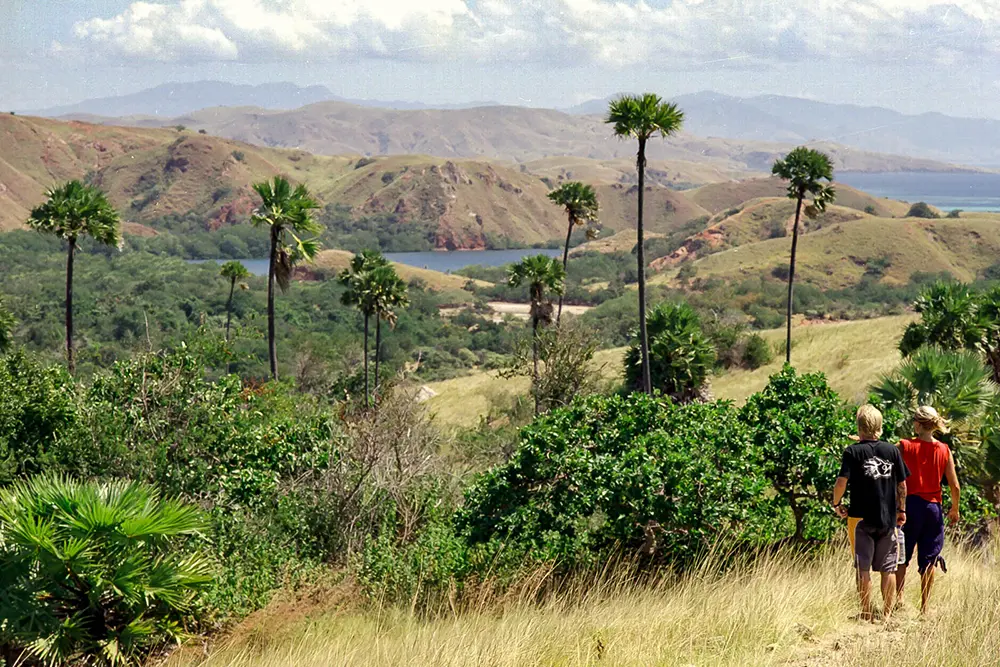
Padar Island
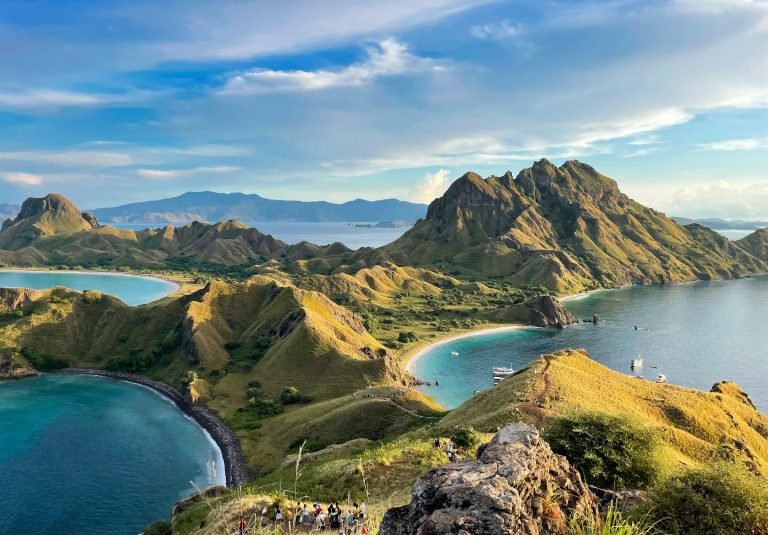
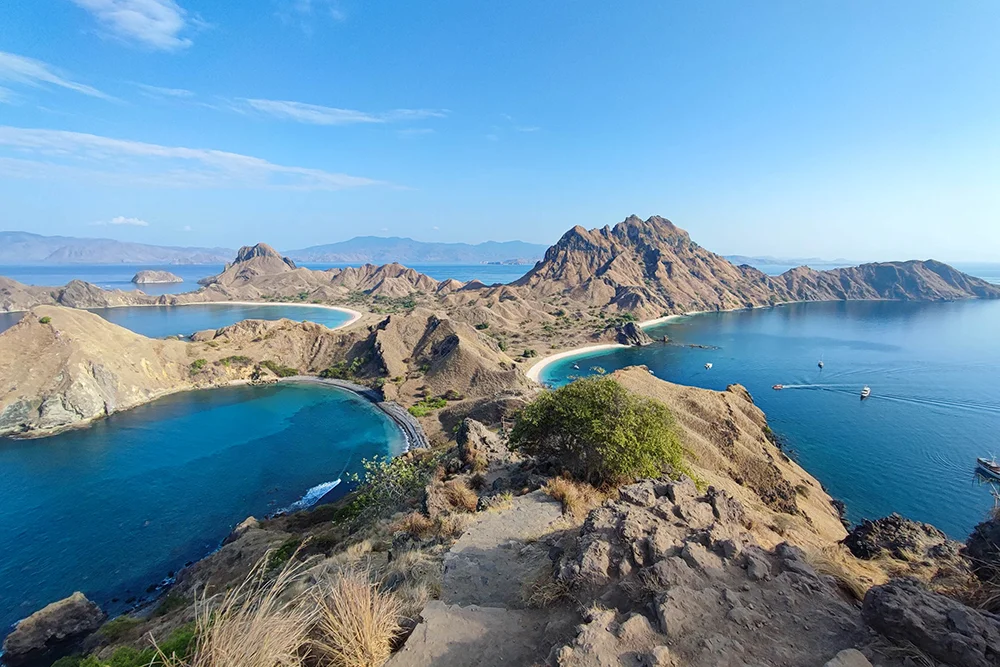
This sunrise hike is the iconic Komodo postcard. It involves hundreds of steep steps and warm temperatures even at dawn. Young children may need assistance, but the view is worth the early start.
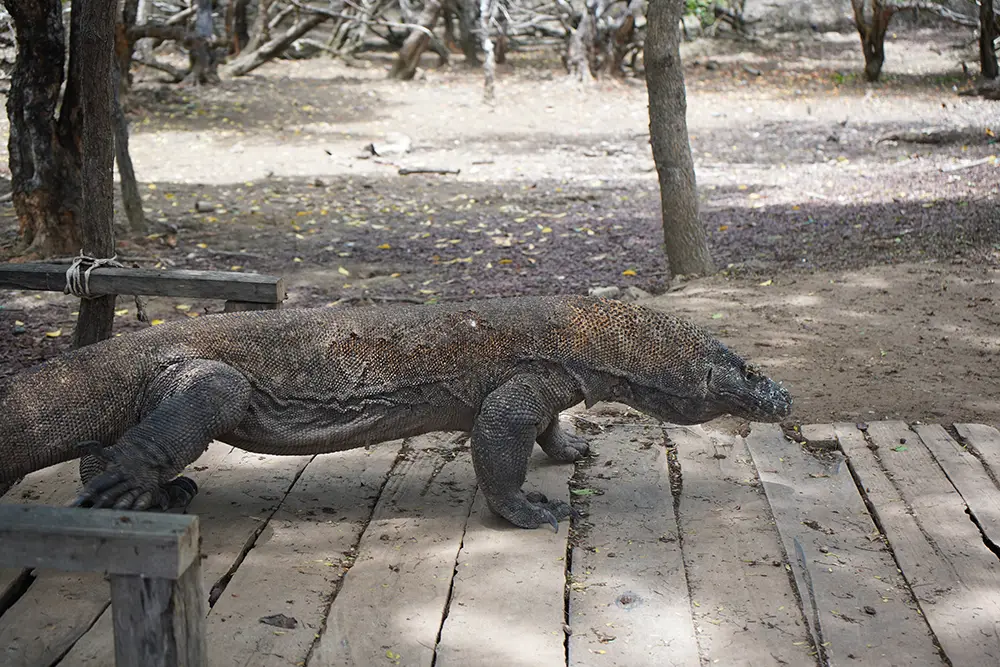
Komodo or Rinca Island
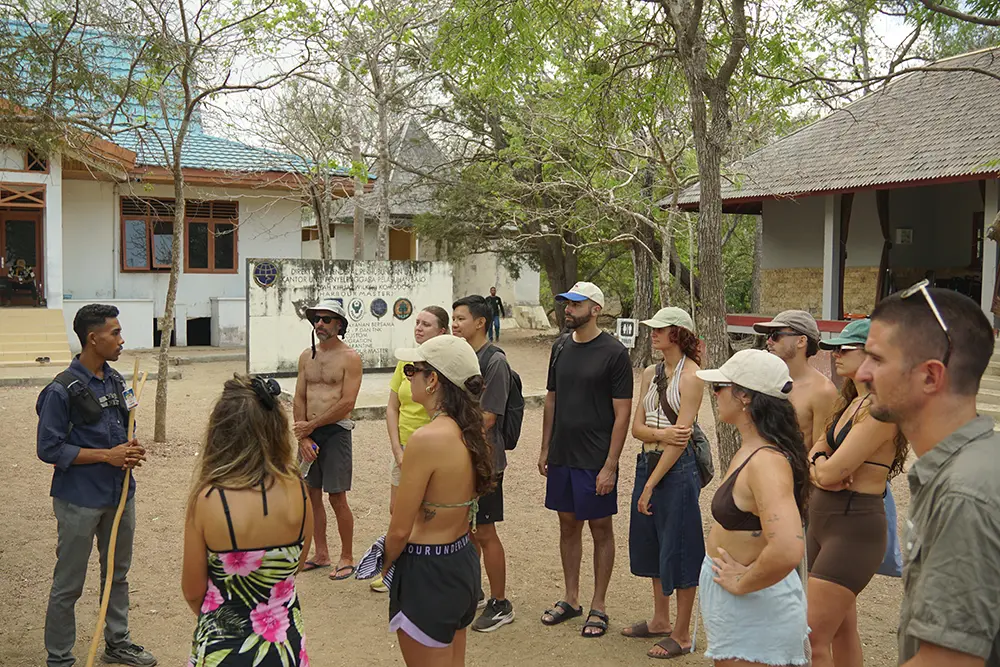
Meeting the dragons is the moment many families look forward to. Rangers guide every group and enforce crucial safety rules. To keep the experience smooth and safe for kids, remember:
- Stay close to the ranger at all times
- Avoid sudden movements or loud noises
- Keep children between adults
- Follow the marked paths and instructions
Rinca is often the better choice for families because the walk is shorter and more shaded.
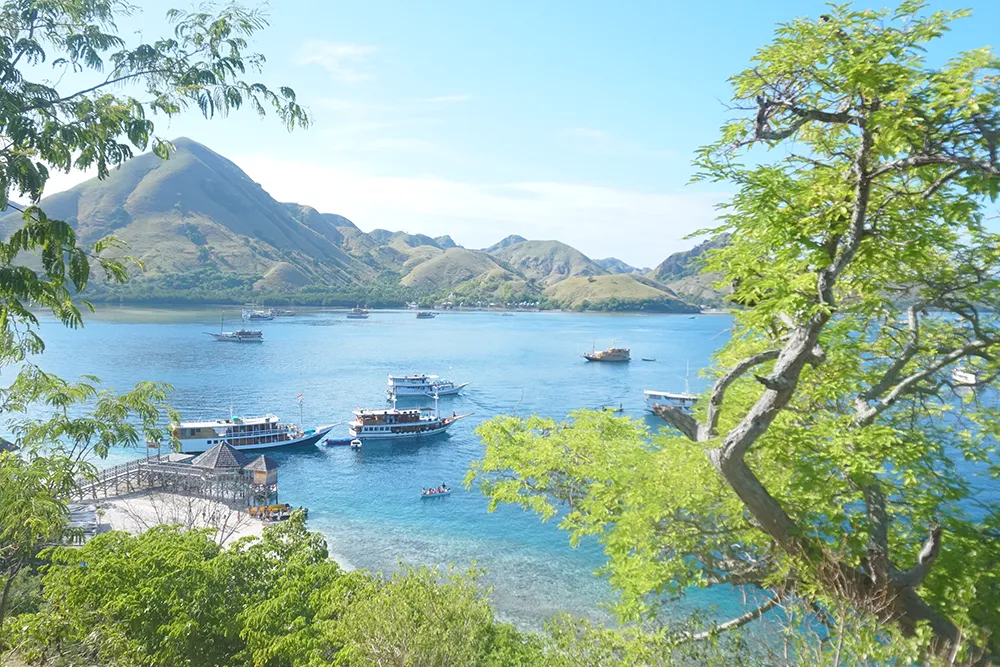
Kelor Island
Kelor’s viewpoint is steep but short. If a child feels unsure (or the heat is strong), it’s completely fine to skip the climb—one adult can stay on the beach or on the boat while others hike, and the stop is still enjoyable for swimming and beach time.
Snorkeling and Water Moments
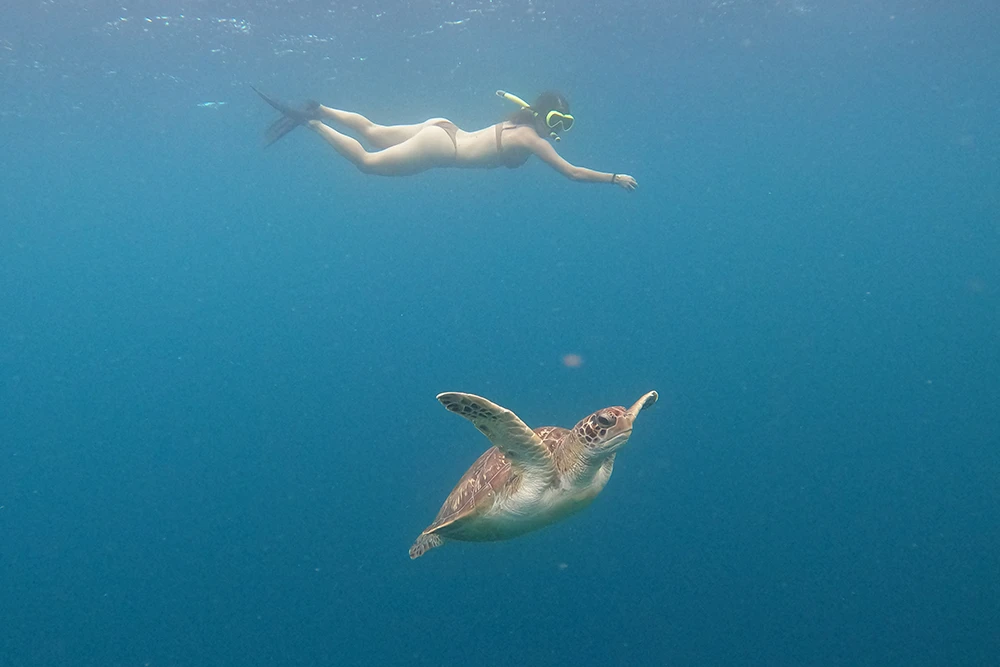
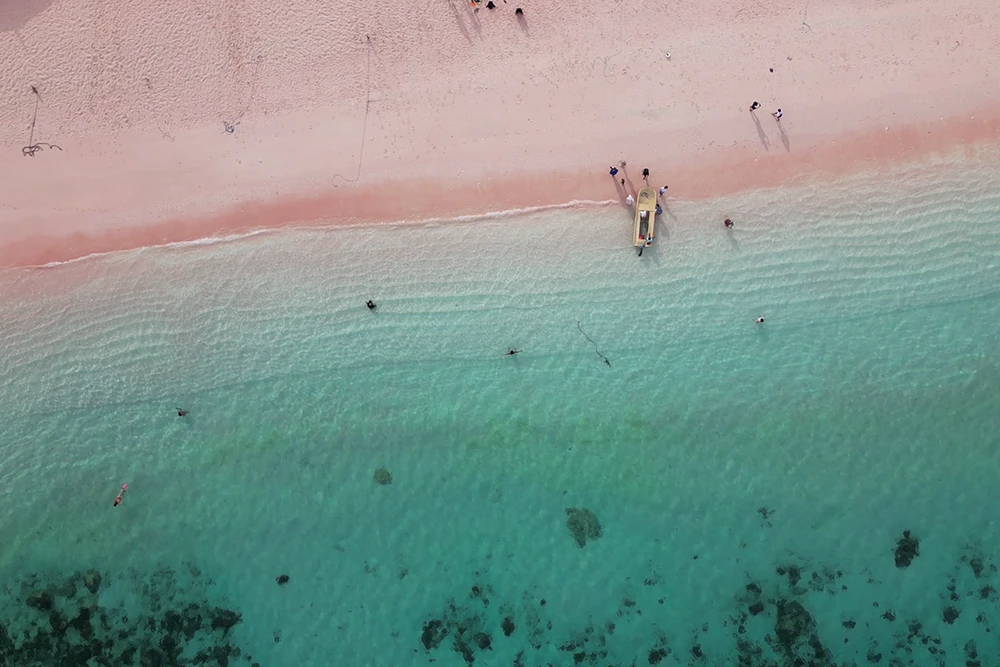
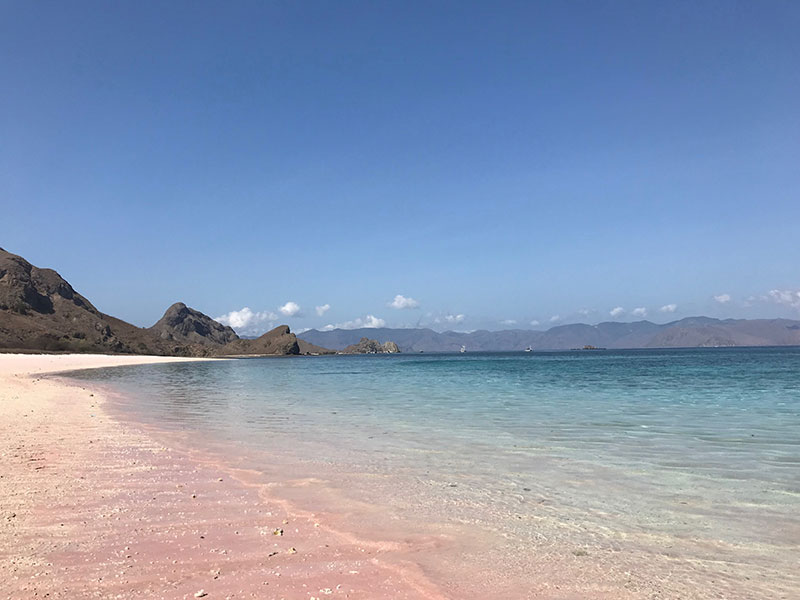
Most of your trip will be spent in the water. Calm, beginner-friendly spots like Siaba Besar (often called “Turtle City”) and other sheltered reefs around the central islands are great for kids to float, practice, and spot fish and turtles. Pink Beach is another favorite, combining bright sand, shallow reefs, and soft waves.
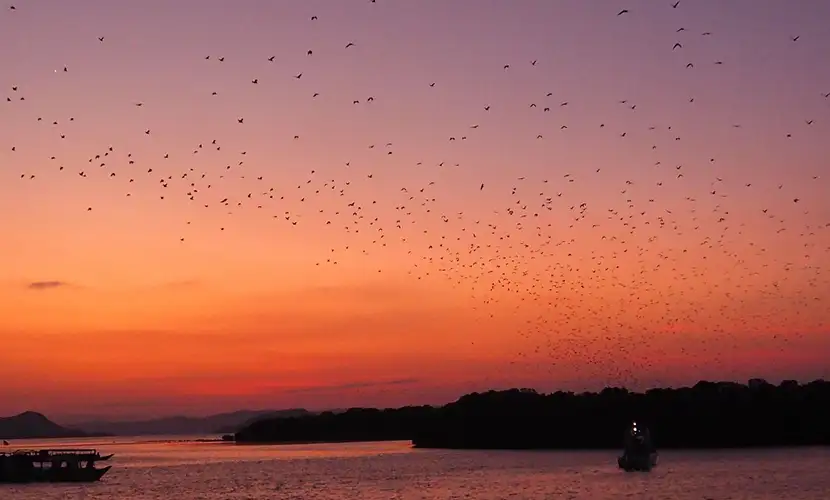
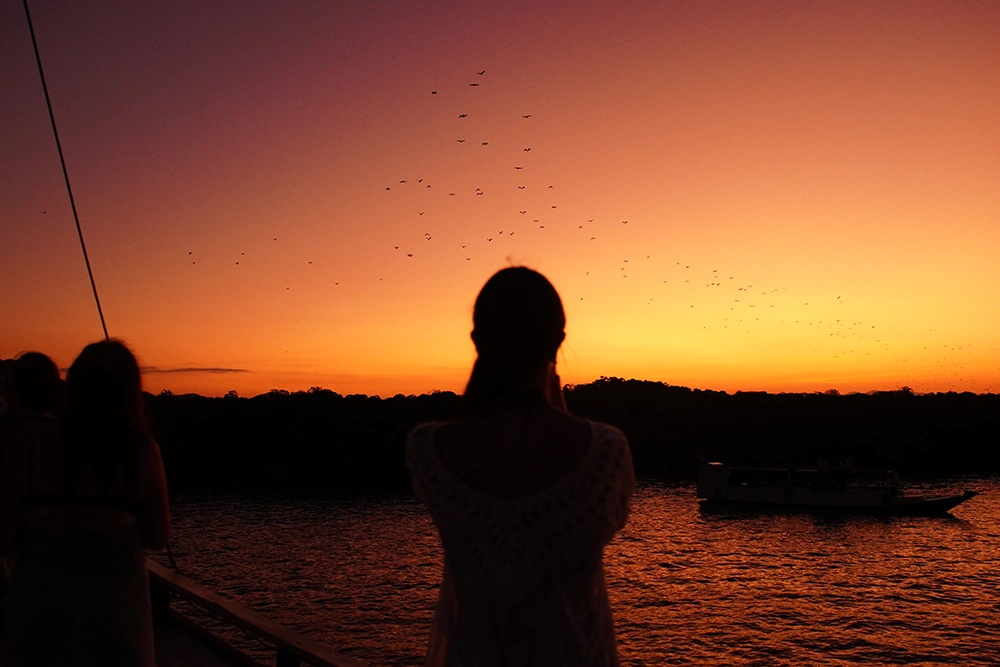
Not all magic moments require swimming. At Kalong Island, thousands of flying foxes sweep across the sky at sunset—a breathtaking sight that often becomes a family favorite. Taka Makassar, a tiny sandbar surrounded by turquoise water, feels like stepping into a movie scene.
For older kids and confident swimmers, Manta Point offers a thrilling drift experience alongside giant manta rays. It’s unforgettable, but requires strong swimming skills and careful supervision from the crew.
Life on Board
Connectivity is patchy. Many areas in the park now get some 4G signal, but there are still dead zones, and speeds can drop when boats are far from coverage. Some boats provide Wi-Fi via a 4G router (and a few use satellite options), so it’s worth asking what your boat offers—and treating it as a bonus, not a guarantee.
Food on board is usually excellent—fresh fish, vegetables, rice, noodles, and fruit. If your kids prefer very simple meals, you can bring a few essentials and let the crew know in advance. Bringing favorite snacks is always a good idea.
Boat life is comfortable but simple. The generator runs at night to power AC, marine bathrooms can feel basic, and everyone stays salty and sun-kissed throughout the cruise. These small realities are part of what makes the trip feel like a true family adventure.
2026 Essentials: Fees, Insurance, and Health
Below is a simplified overview of the essentials for families in 2026:
|
Category |
What to Expect |
|
Park Fees |
3 Days 2 Nights (3D2N): around IDR 500,000 – 750,000 per person 4 Days 3 Nights (4D3N): around IDR 800,000 – 1,000,000 per person |
|
Insurance |
Not included—guests arrange this themselves. Choose a policy that covers boat trips and includes medical evacuation. |
|
Medical Facilities |
Limited in Labuan Bajo; serious cases require transfer |
|
Seasickness |
Give medication before departure |
Park fees are set by government regulation and must be paid in cash. Payment rules can vary by operator and ticketing system, so bringing enough Indonesian Rupiah for your whole family is important—around USD $100–$150 per person is a reliable estimate, for park fees and other fees like : Tips; shopping and emergency cash.
Travel insurance with evacuation coverage is non-negotiable. Labuan Bajo’s hospital is limited, and serious issues require evacuation to Bali or Singapore.
If anyone in your family gets seasick, give medicine before leaving the harbor. Make sure to pack a compact family first-aid kit with child-safe medication, bandages, antiseptic wipes, and after-sun gel.
What to Pack
Packing smart makes the trip easier for both parents and kids. A few essentials go a long way:
- Lightweight, quick‑dry clothing
- Rash guards for sun protection
- Comfortable footwear for hikes
- Water shoes for beach landings
- Dry bag for phones and cameras
- Power bank for evenings
- Waterproof phone case
For kids, consider bringing:
- Their favorite snacks
- Books or drawing supplies
- Small games or offline entertainment
- A comfortable snorkel vest if they’re new to snorkeling
Conclusion: A Family Adventure to Remember
A Komodo cruise isn’t just another vacation—it’s a shared family story you’ll talk about for years. When you choose the right boat, set the right expectations, and plan with safety in mind, the experience becomes a meaningful journey through one of Indonesia’s most breathtaking natural environments.
If you want help choosing a trusted, safe, and kid-friendly Phinisi for your 2026 travel dates, we can guide you through the best options based on your family’s needs, comfort level, and budget.
Tap the WhatsApp or Email button below and we’ll help you plan a smooth, unforgettable family adventure.